


What matters most in a bag?
For me, it is the leather.
After all,
a bag is made by cutting and stitching leather.
That is why luxury houses such as Hermès and Chanel
go to such lengths
to source fine leather from the best tanneries.
Thierry Studio
uses the same leathers as Hermès.
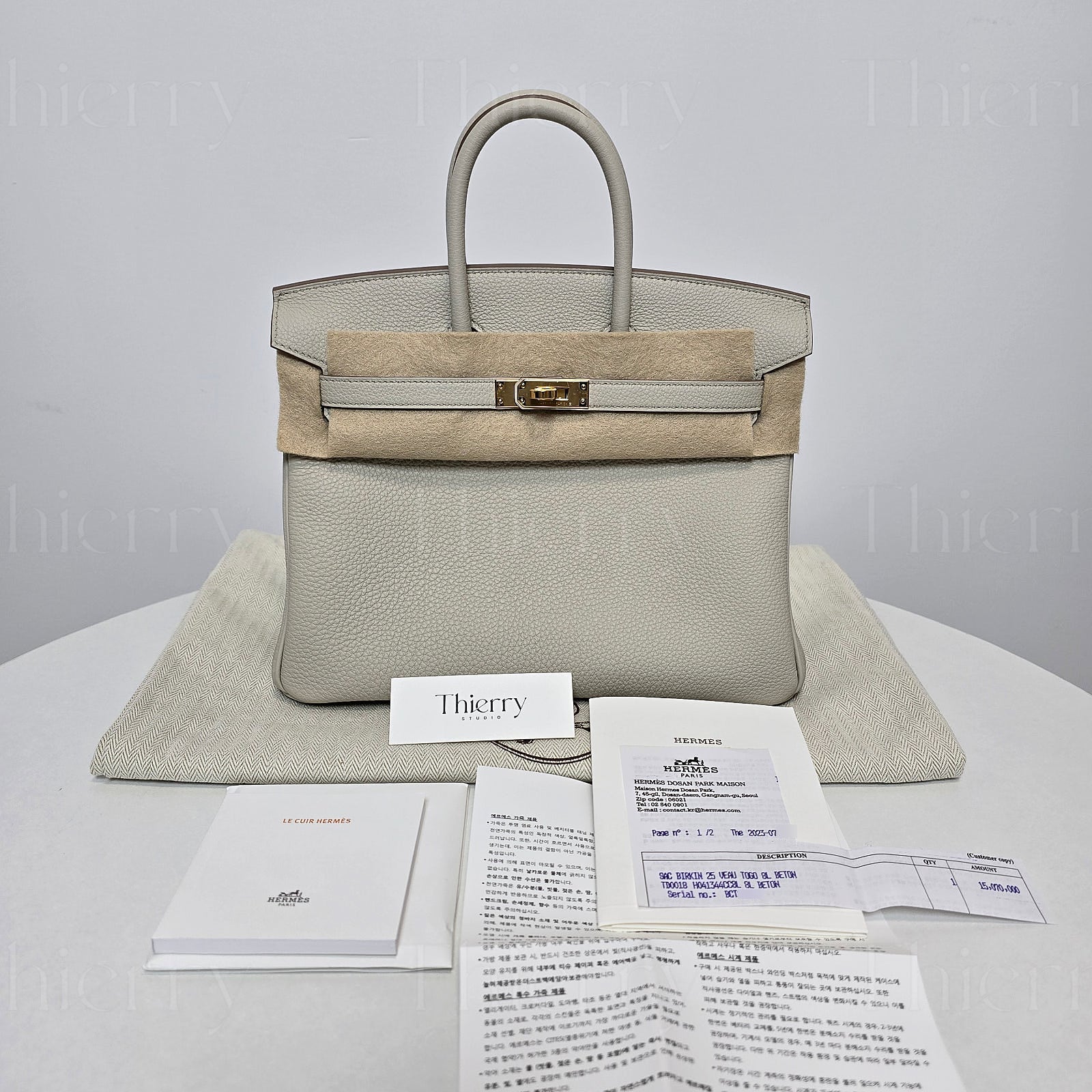
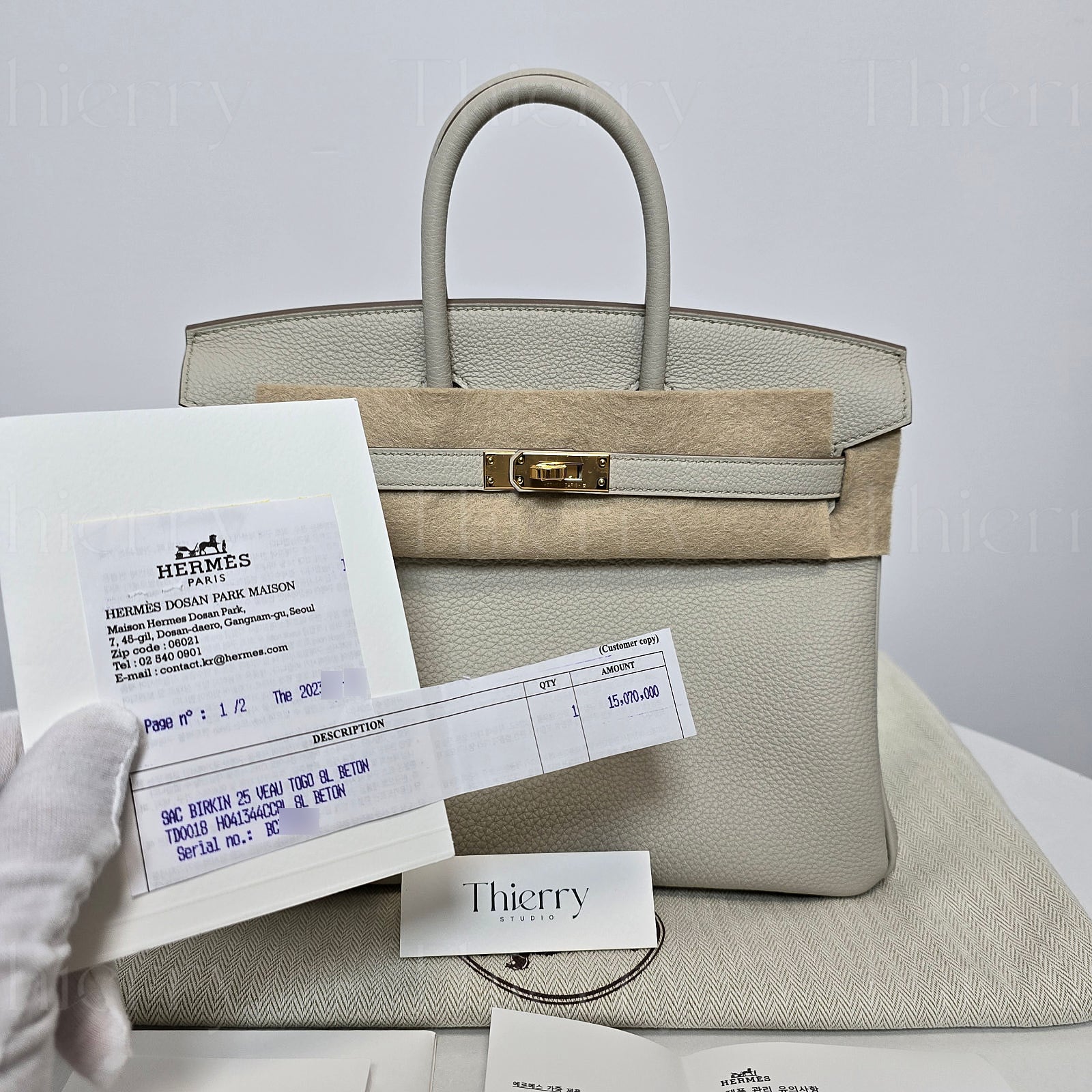
First, proof of the authentic purchase
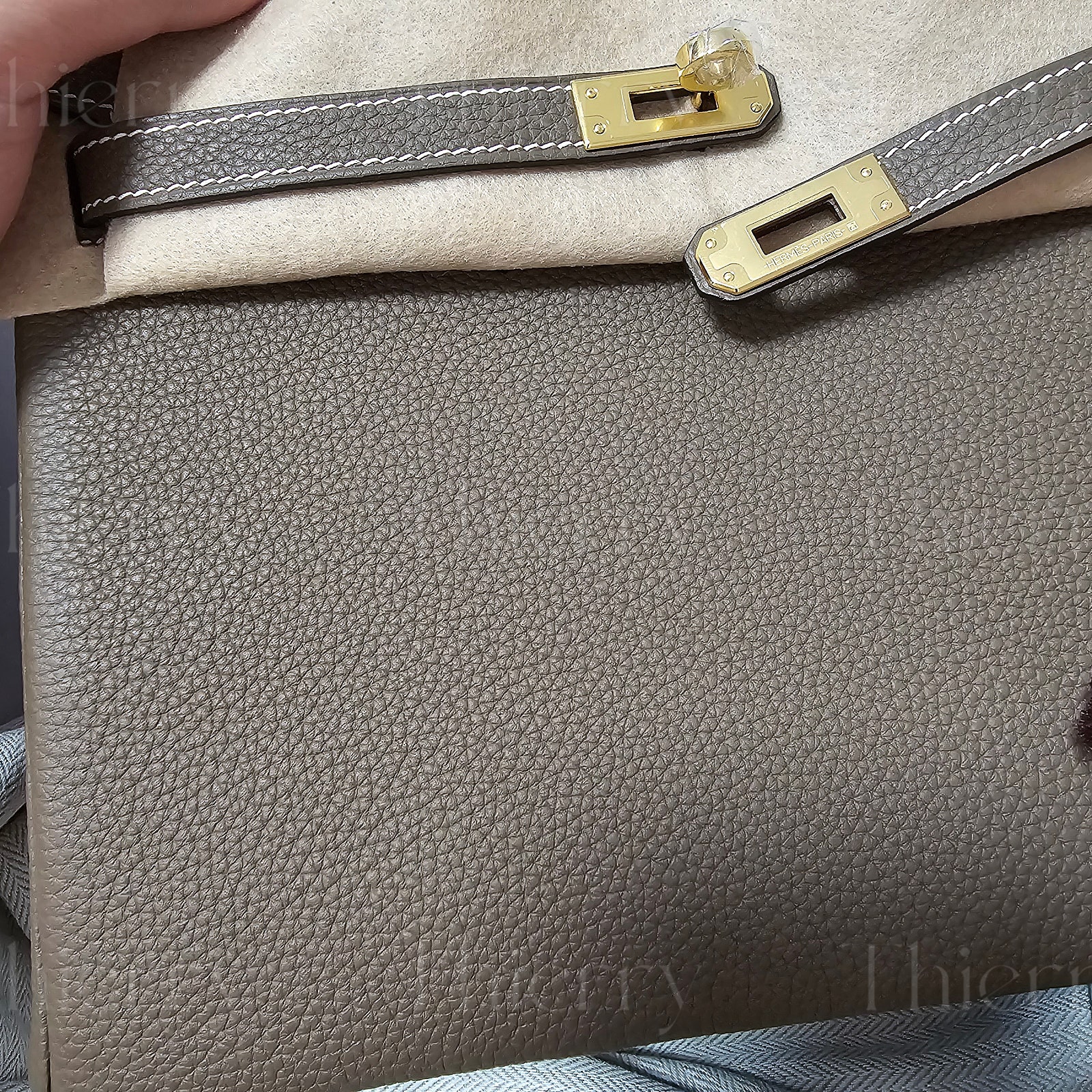
Birkin 25 in Beton Togo
2023 B stamp <Boutique-purchased example>
Resale reference: approx. US$24,600
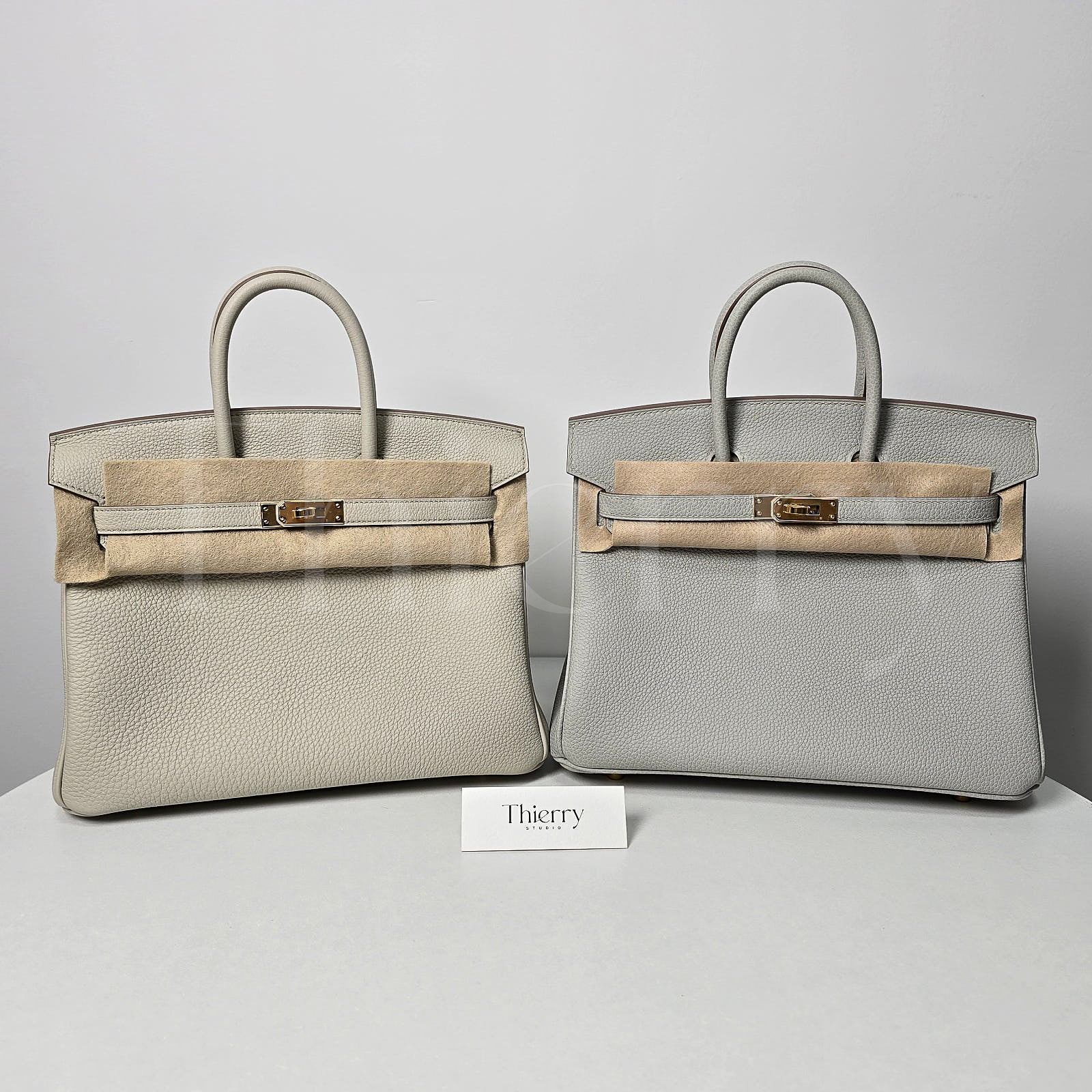
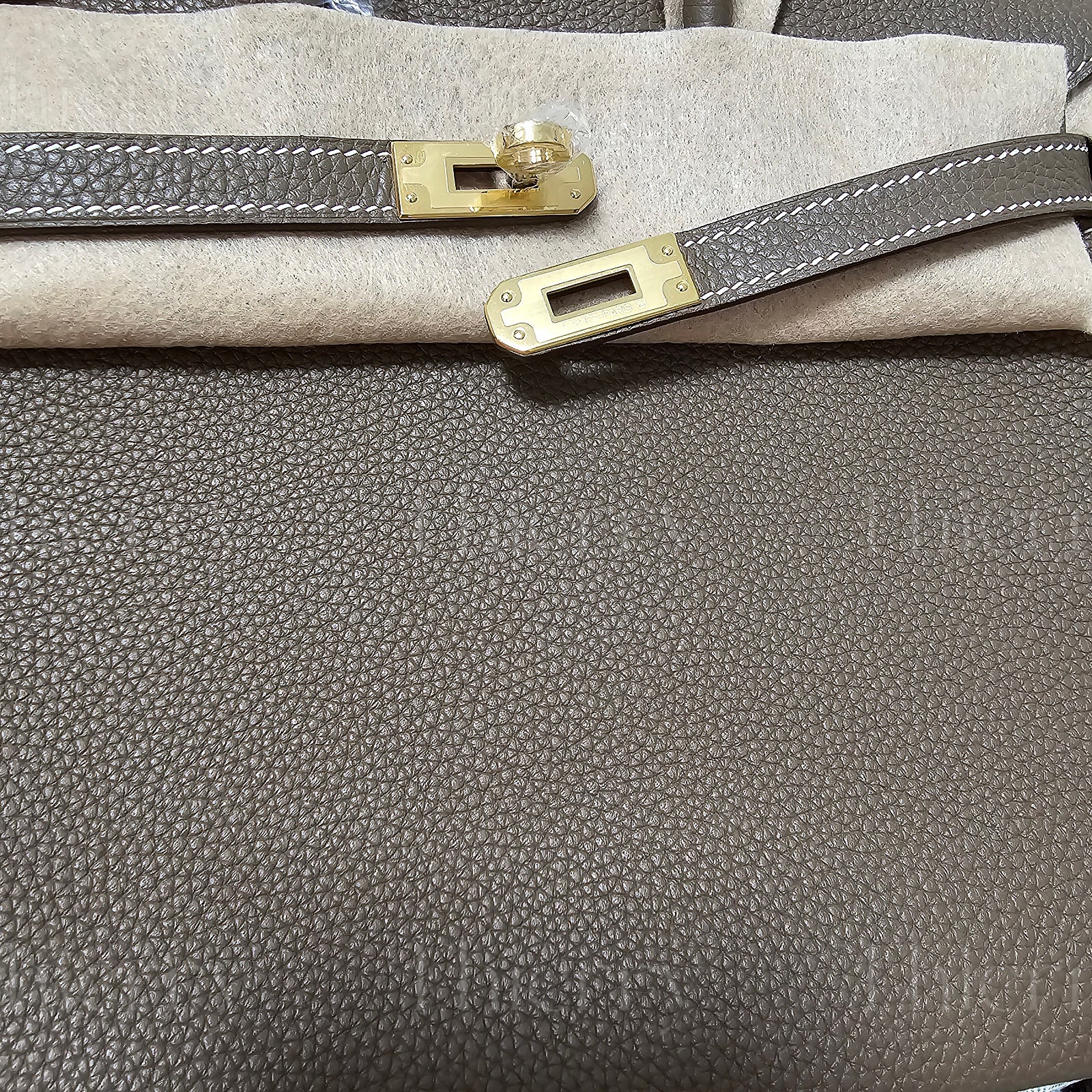
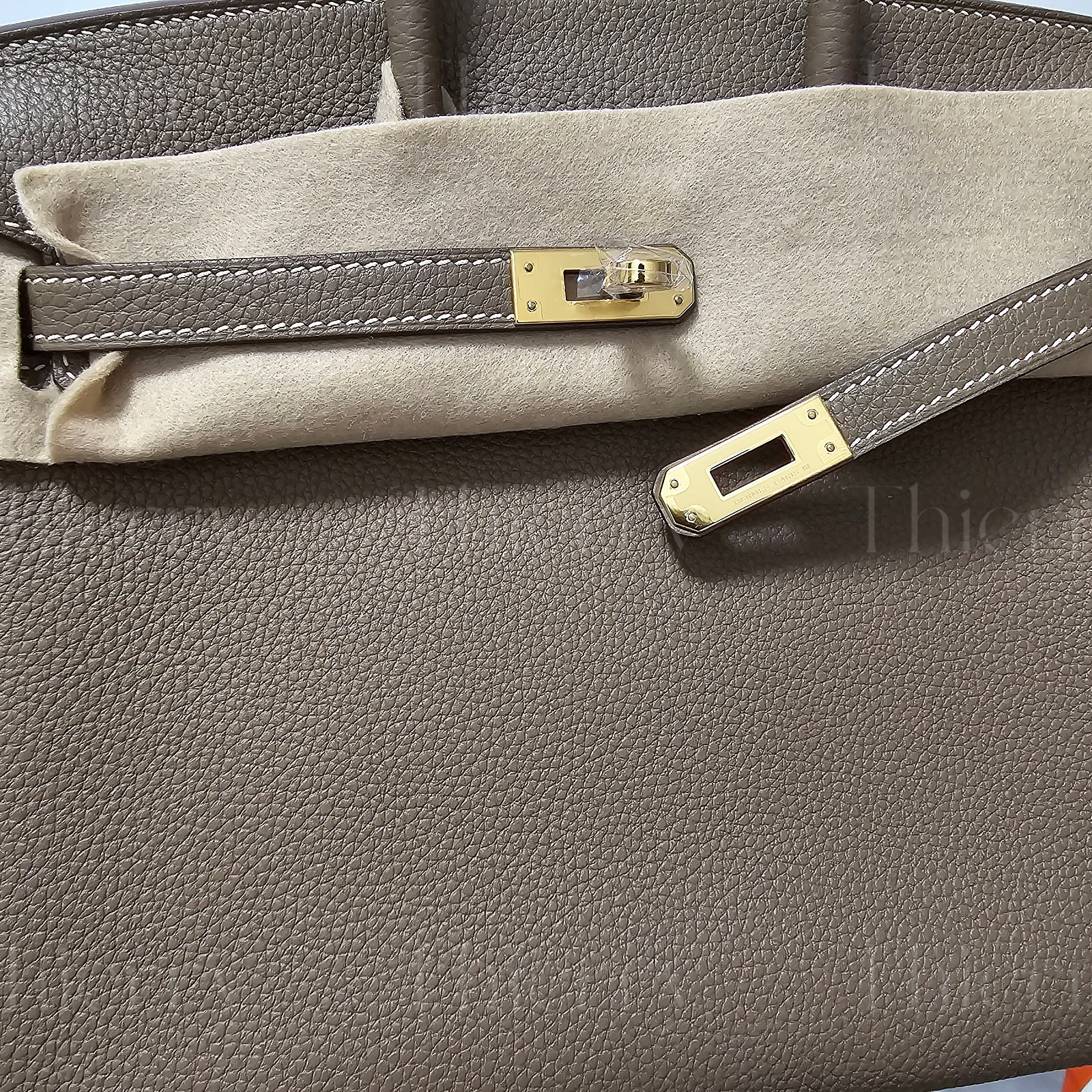
Authentic Beton / Thierry Studio Pearl Gray
(We used Pearl Gray for this comparison because Beton was out of stock.)

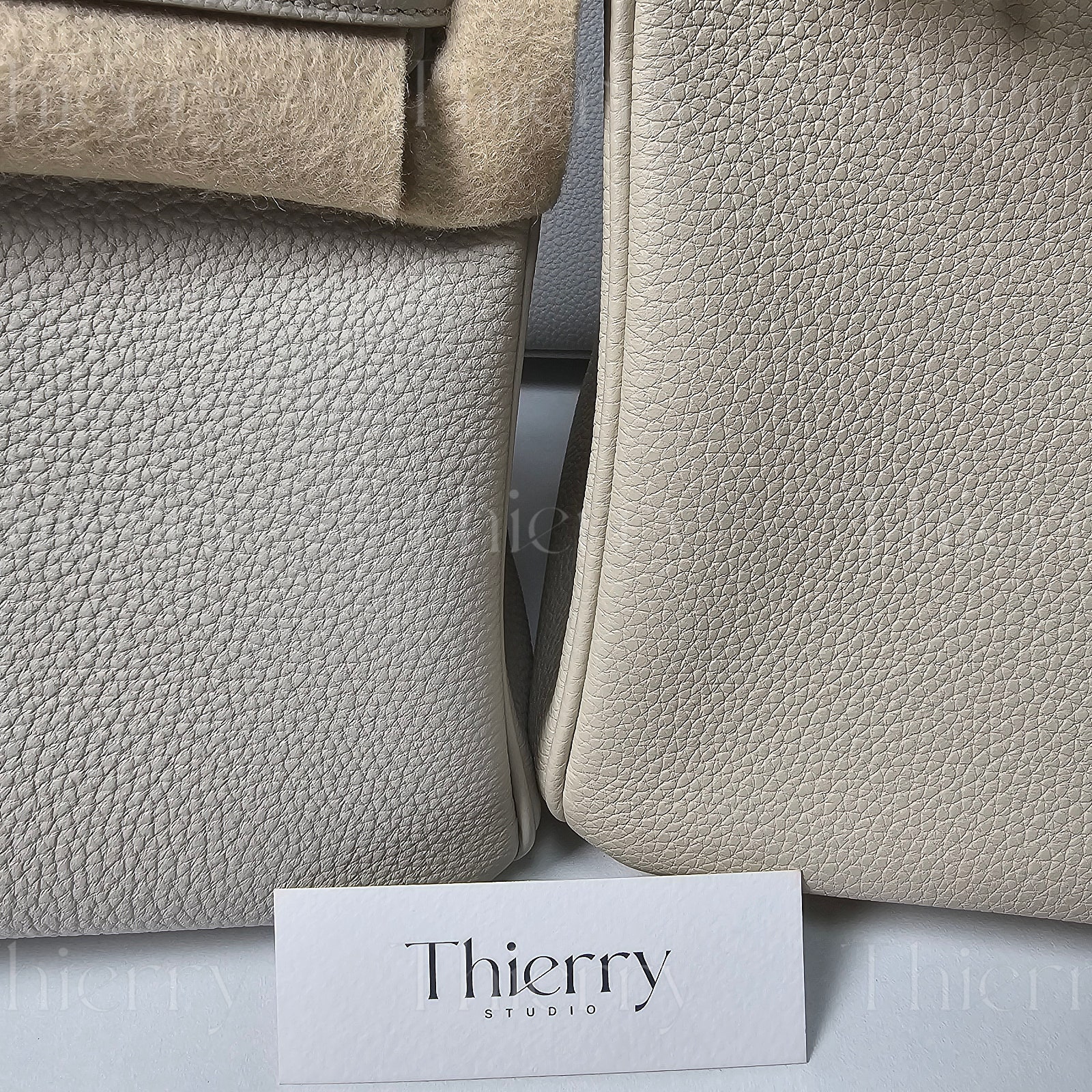
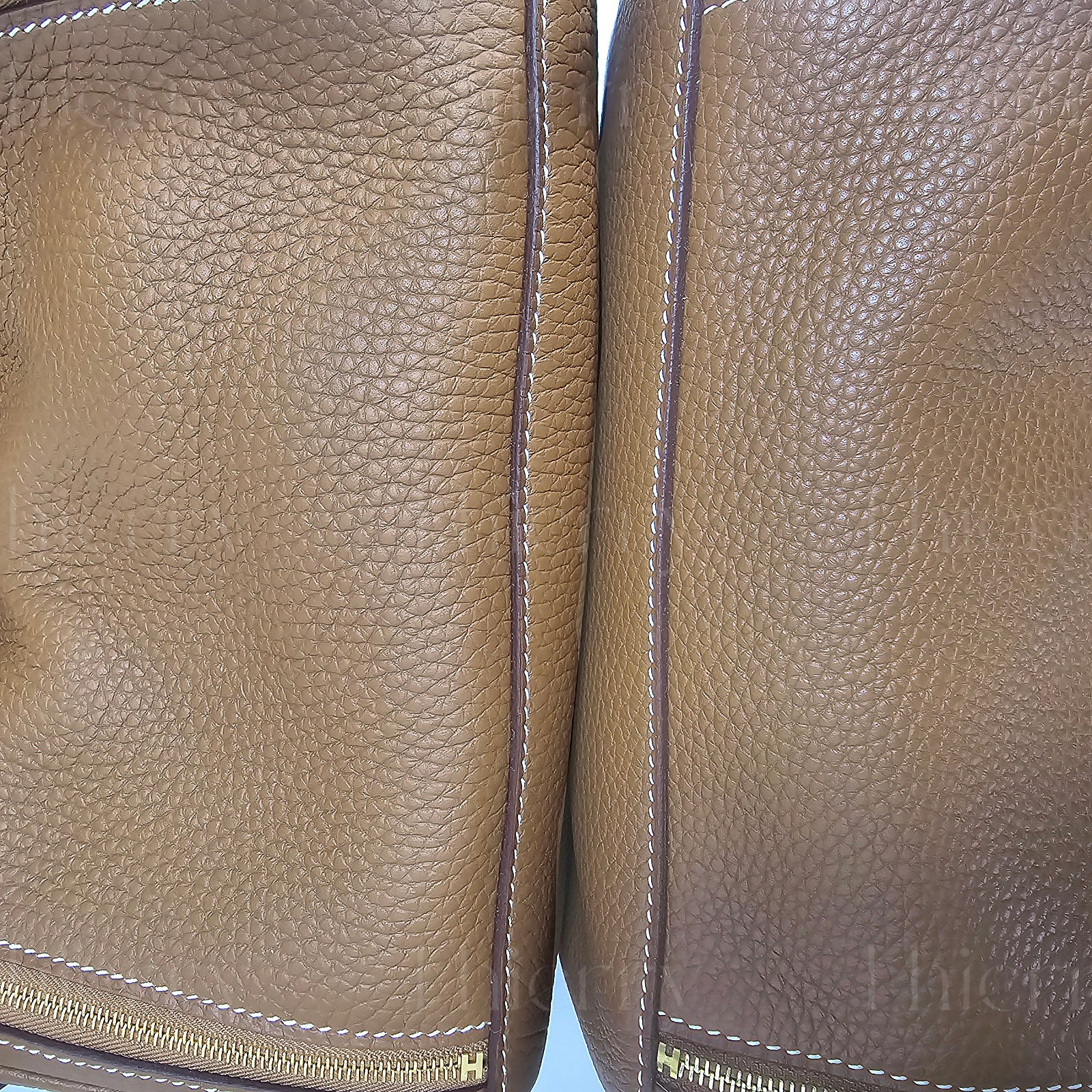
The leather looks exactly the same, doesn’t it?

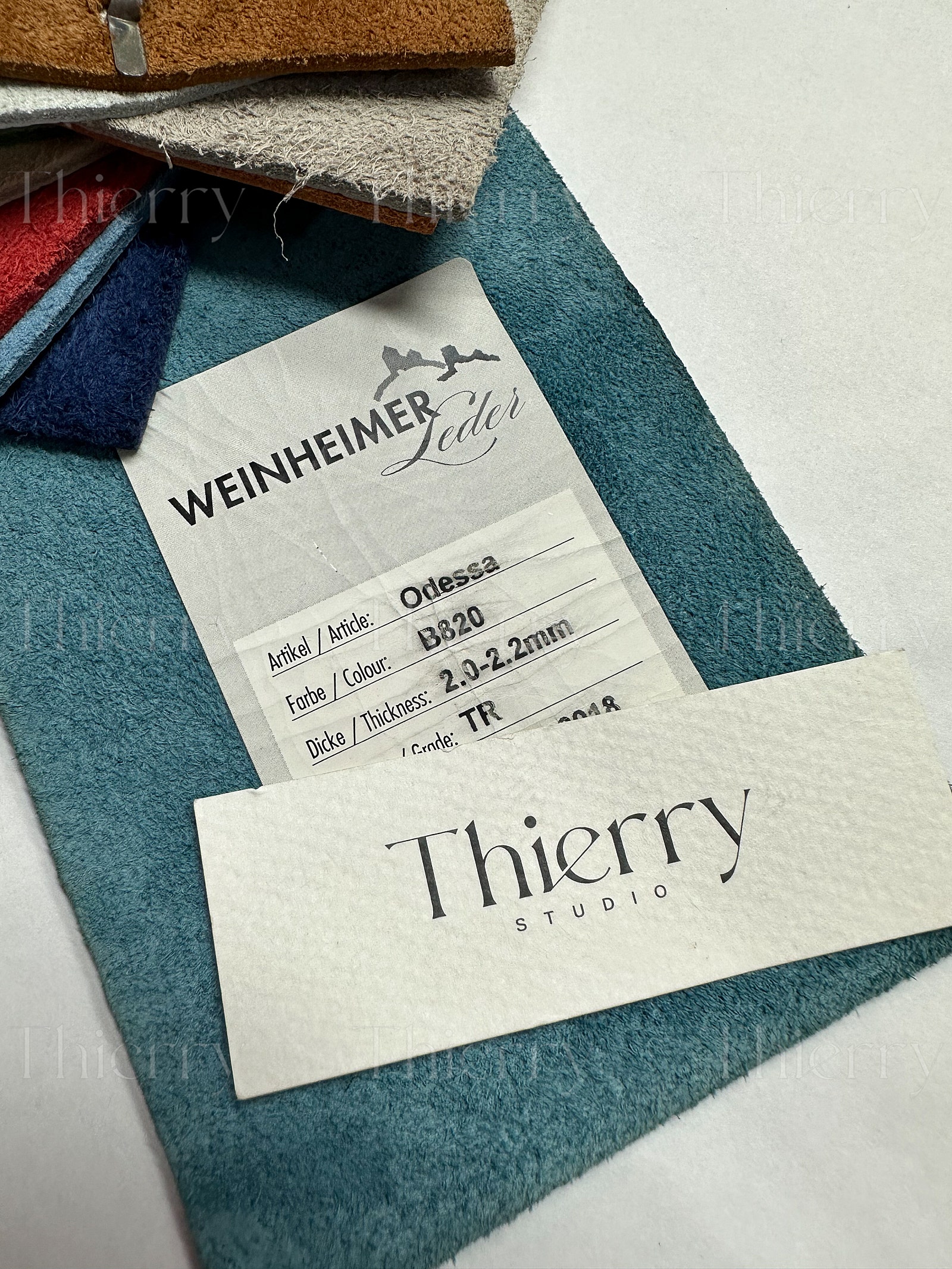
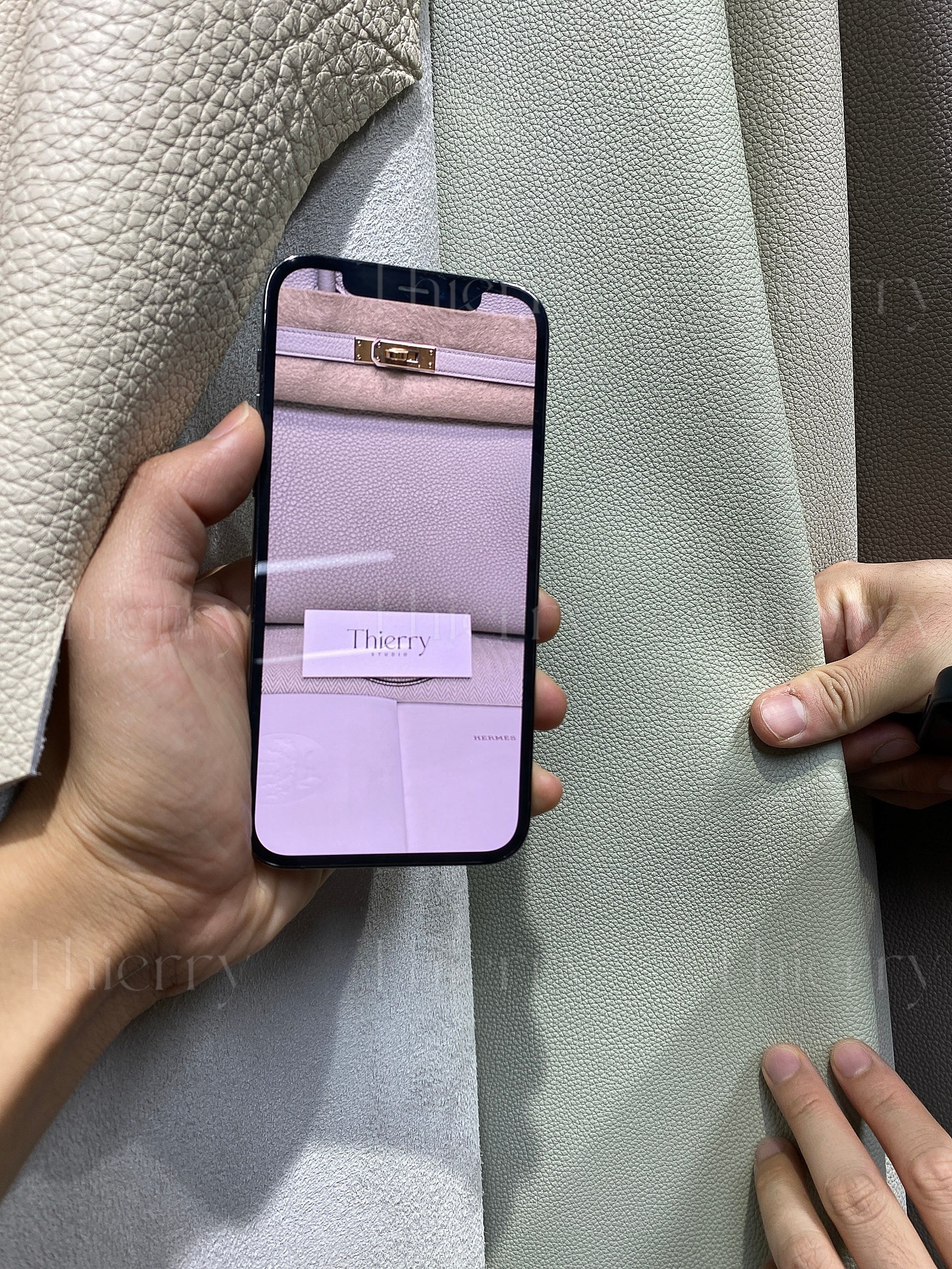
Weinheimer Odessa Calf (Hermès Togo leather), TR (Tannery Run): sourcing evidence
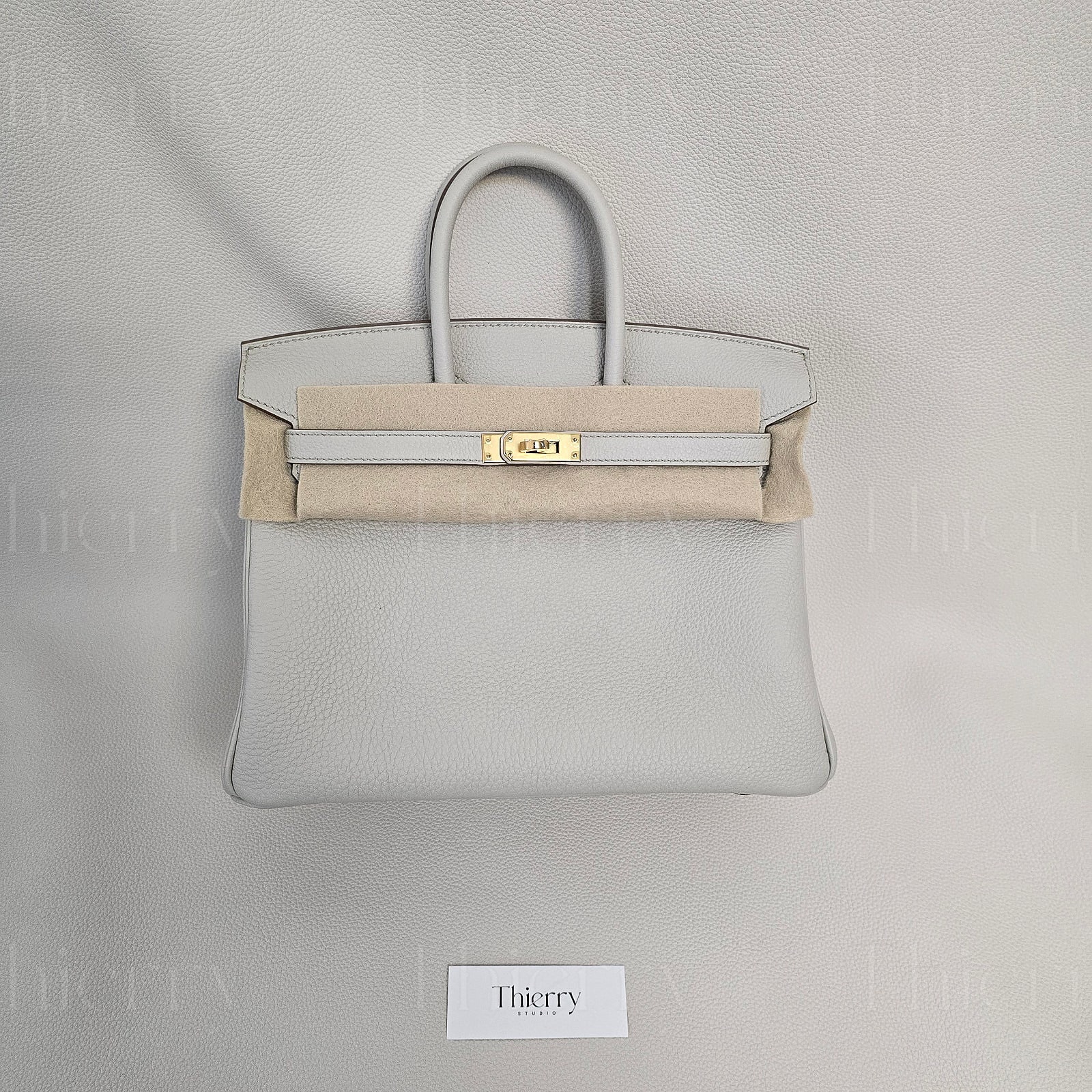
An authentic Birkin
photographed on the same leather used for the original
(Weinheimer Togo in Beton)
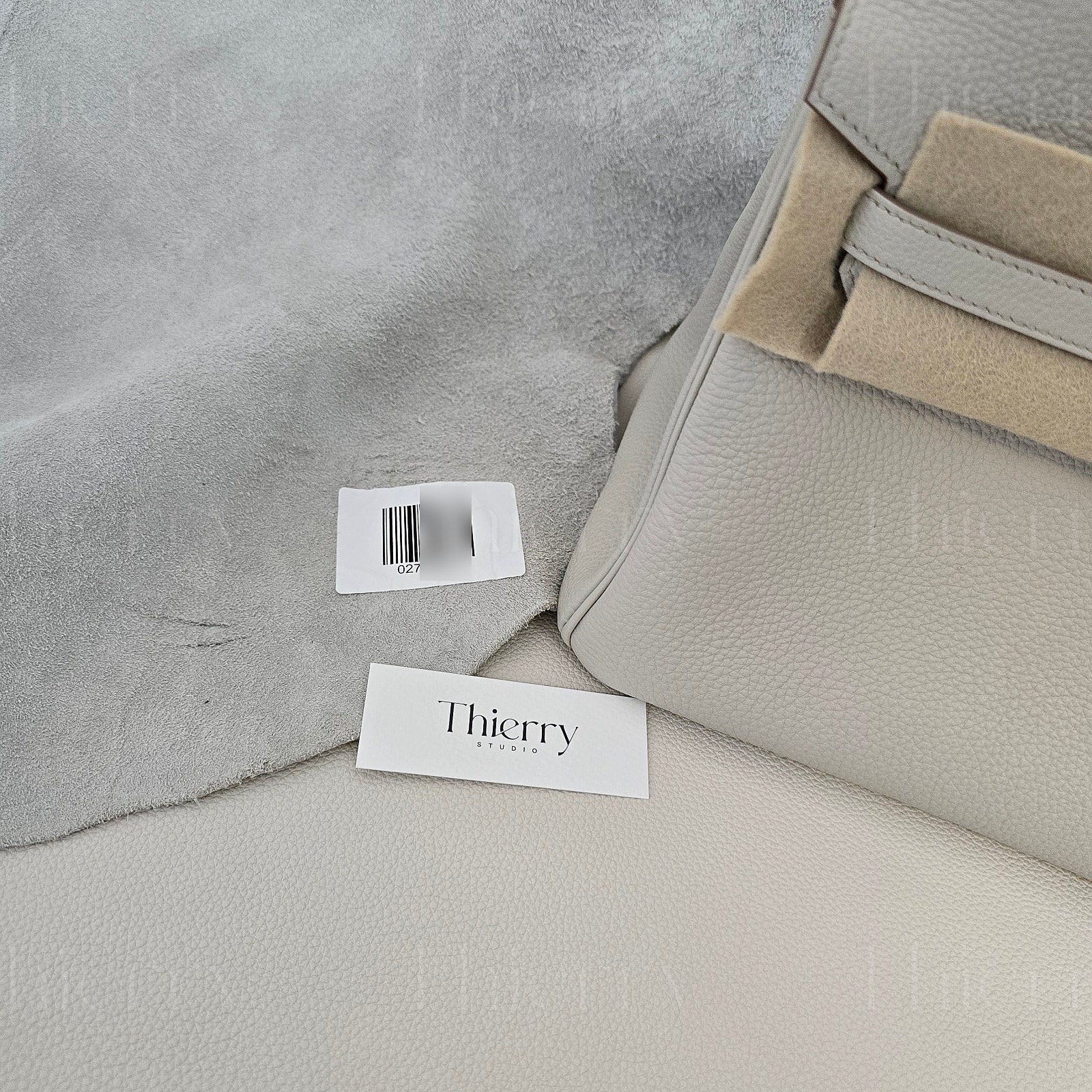
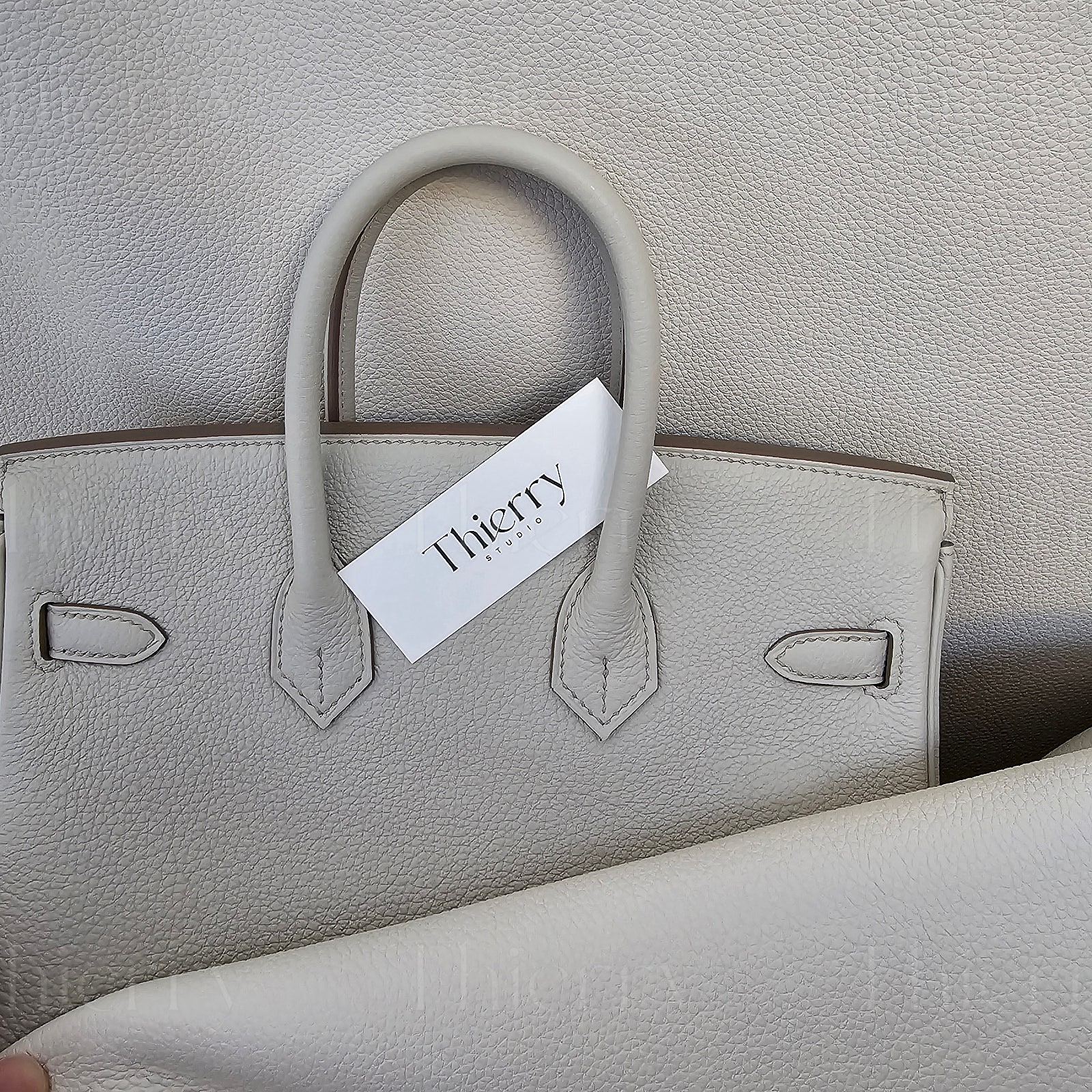
We wrapped the leather around the bag.
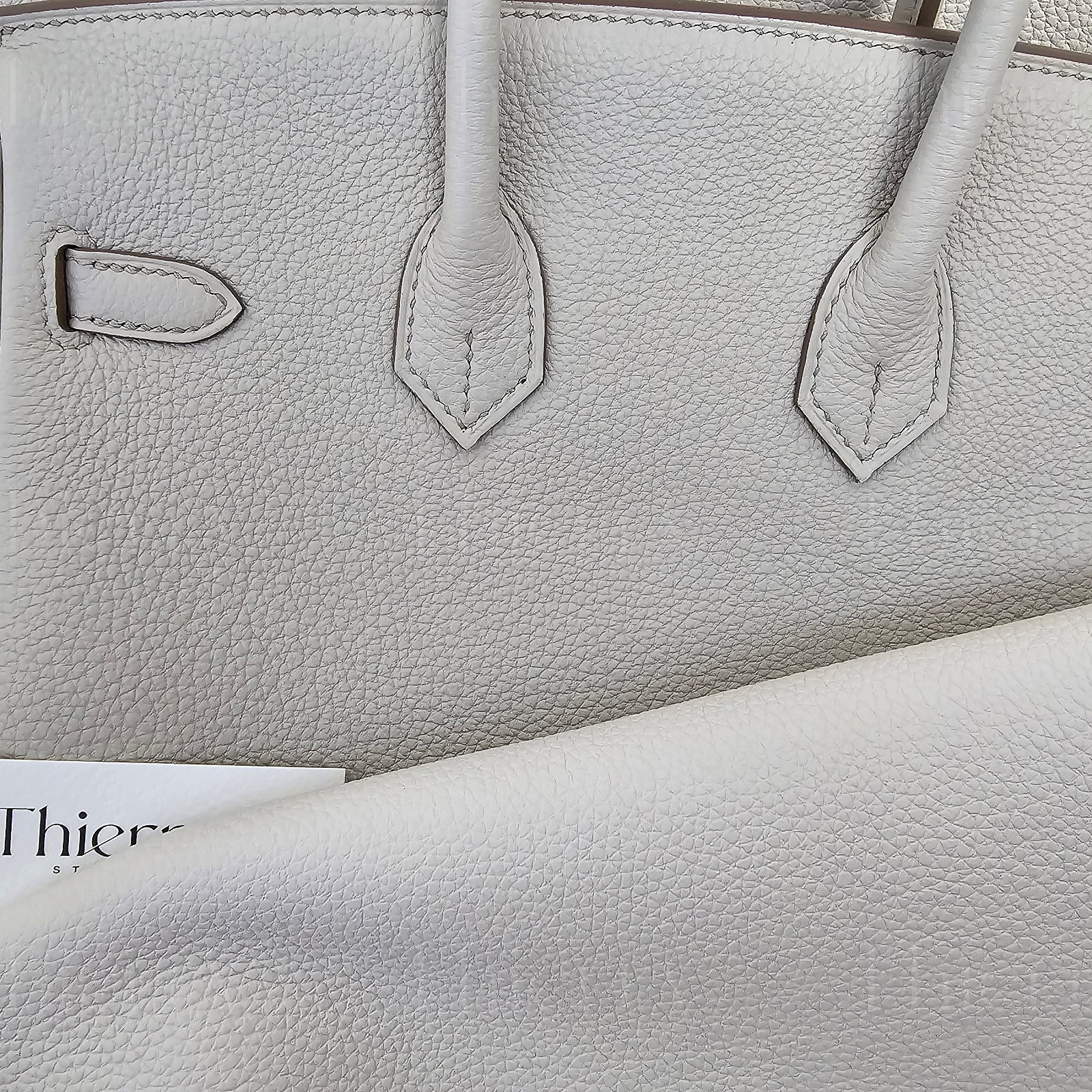
The color, feel and every other quality match.
Next, the Lindy
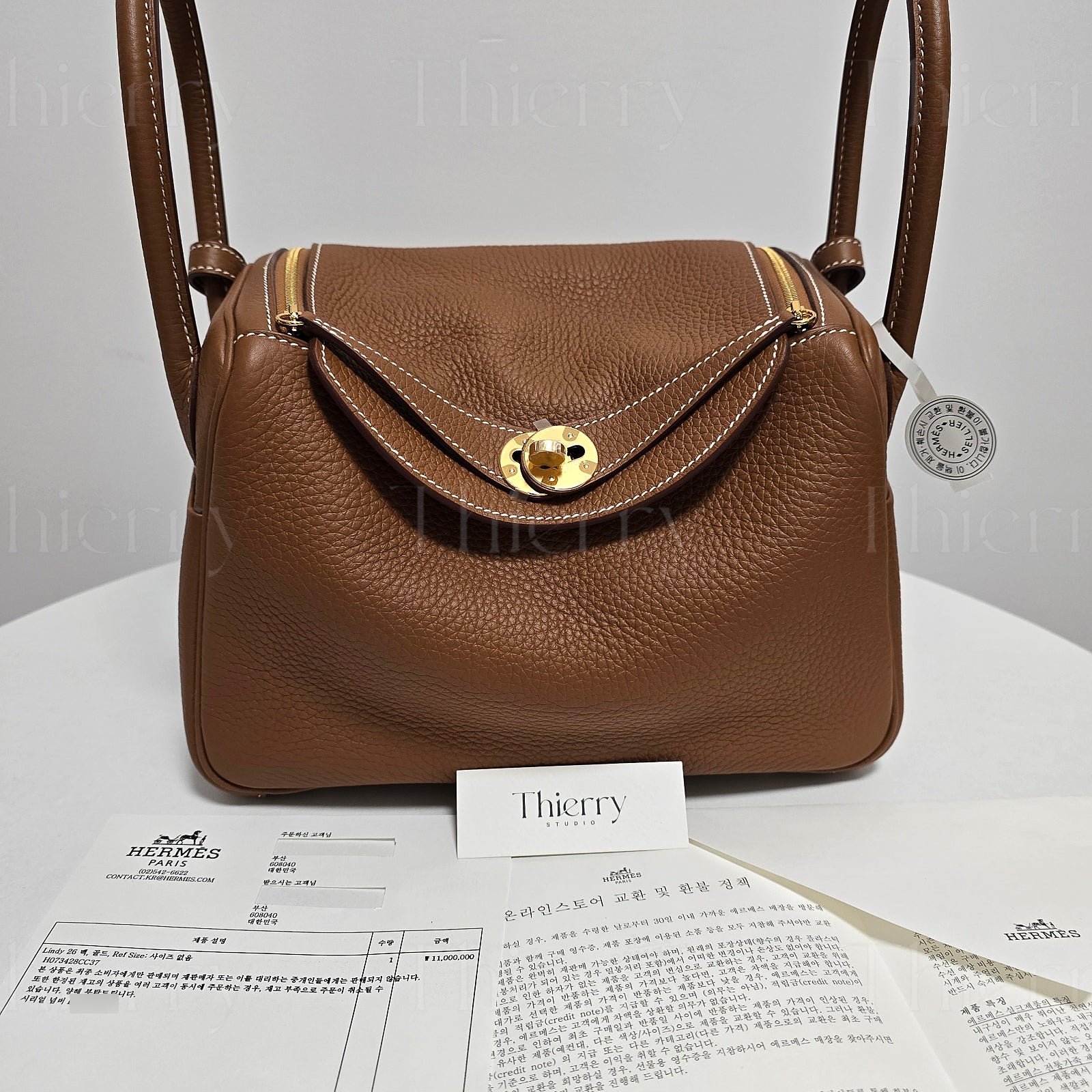
2023 B stamp
Purchased from the official online store
approximately US$11,410
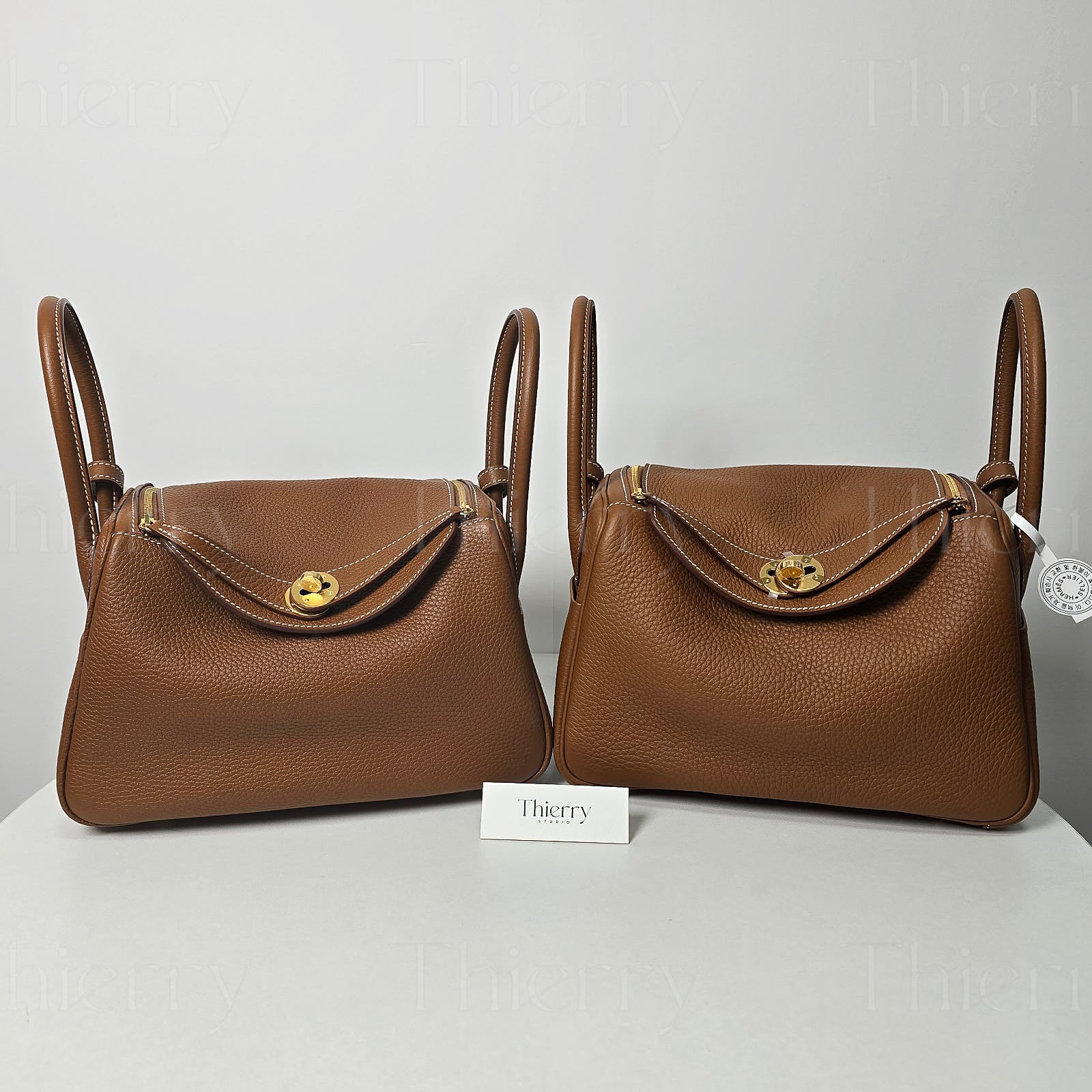
The Lindy on the right, with the tag, is authentic.
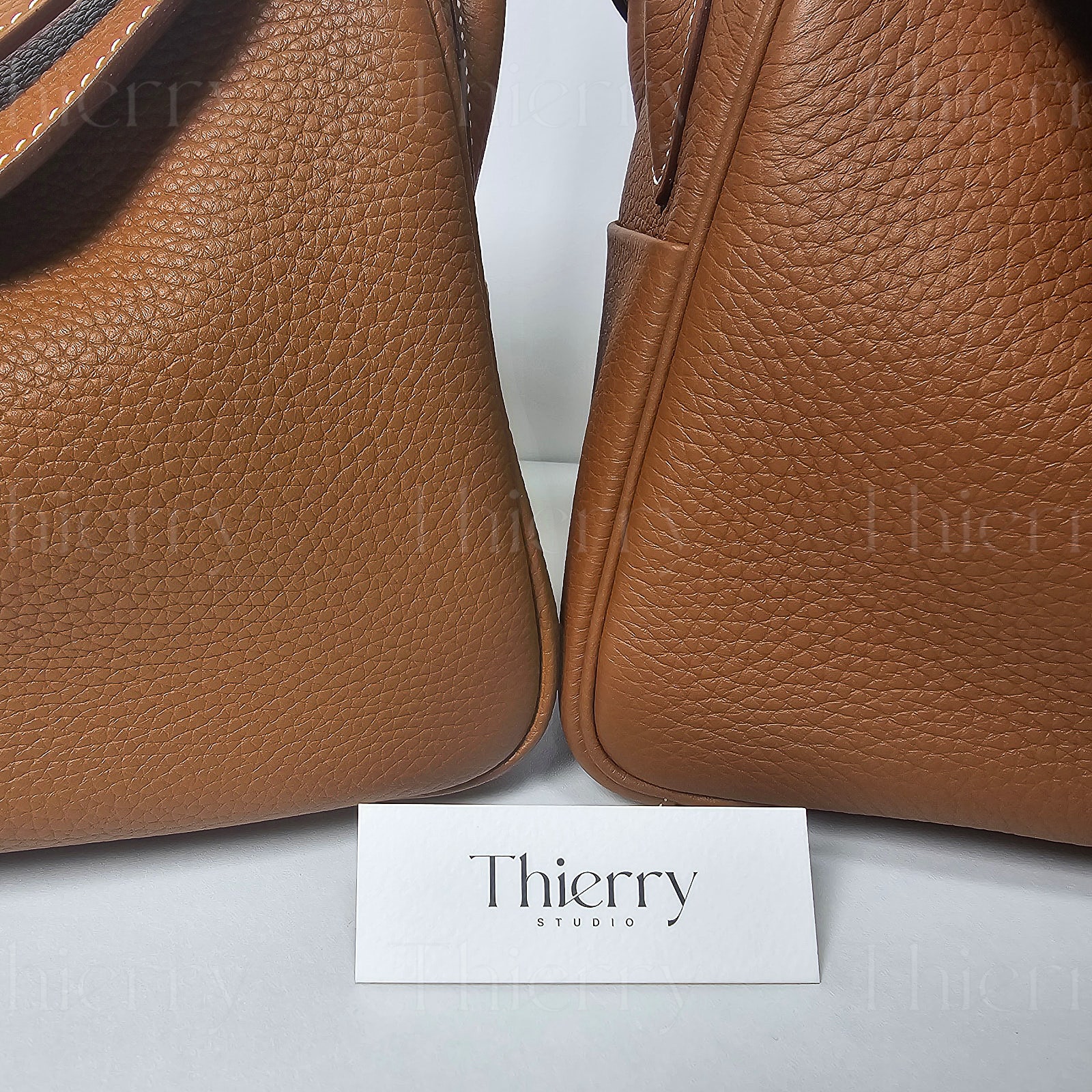
“We make our bags with the same leather as Hermès.”
This is what sets
Thierry Studio apart from other sellers,
and it is the most important part of what we do.
It matters so much
that I hope you will read to the end.
Even a little research
will show that Hermès searches worldwide for the best leather
and uses it to make its bags.
Some of the main leathers used by Hermès are:
Box calf — Du Puy
Ostrich — KK

Clemence — Rémy Carriat
Togo — Weinheimer
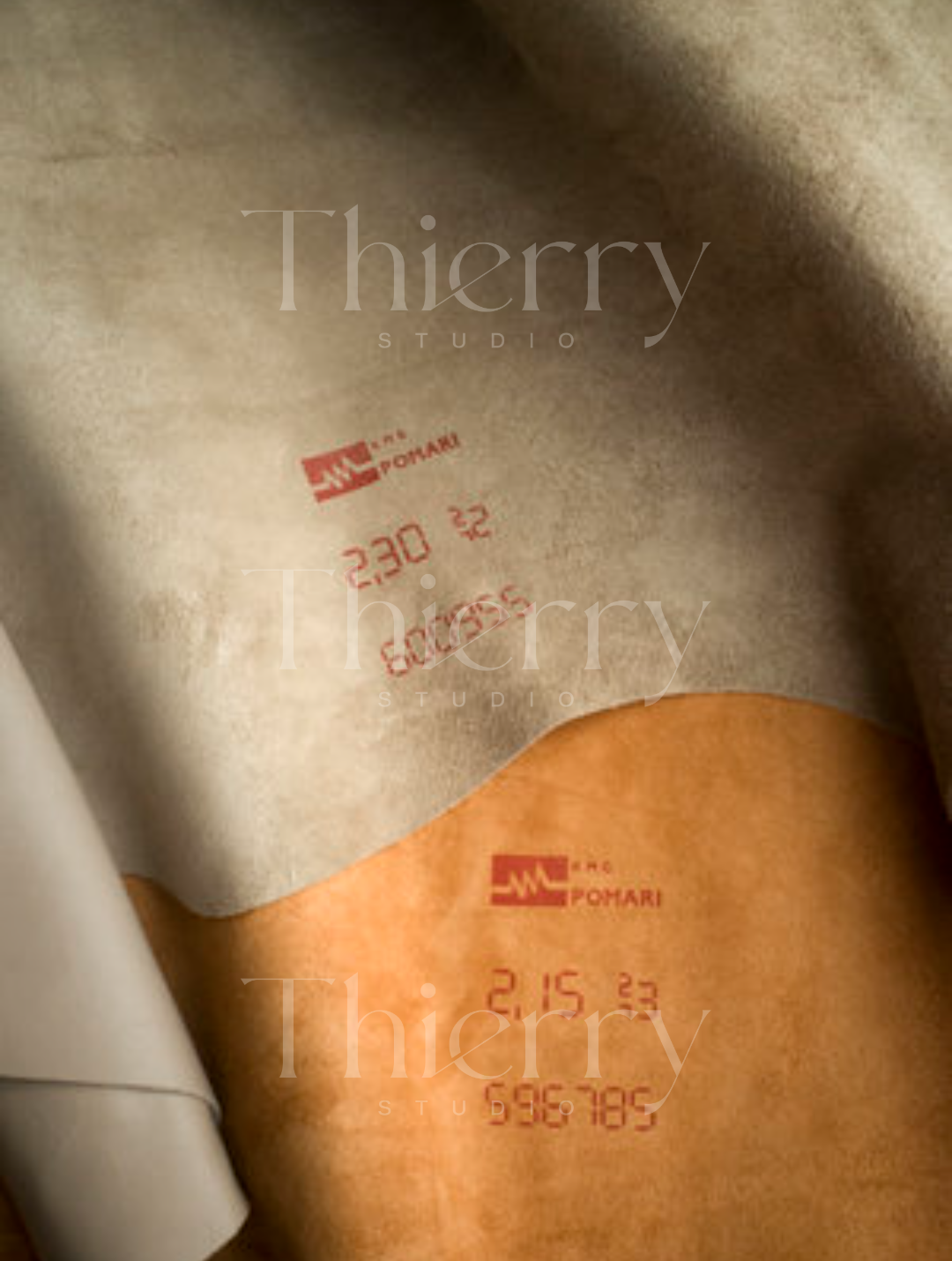
Swift — Pomari
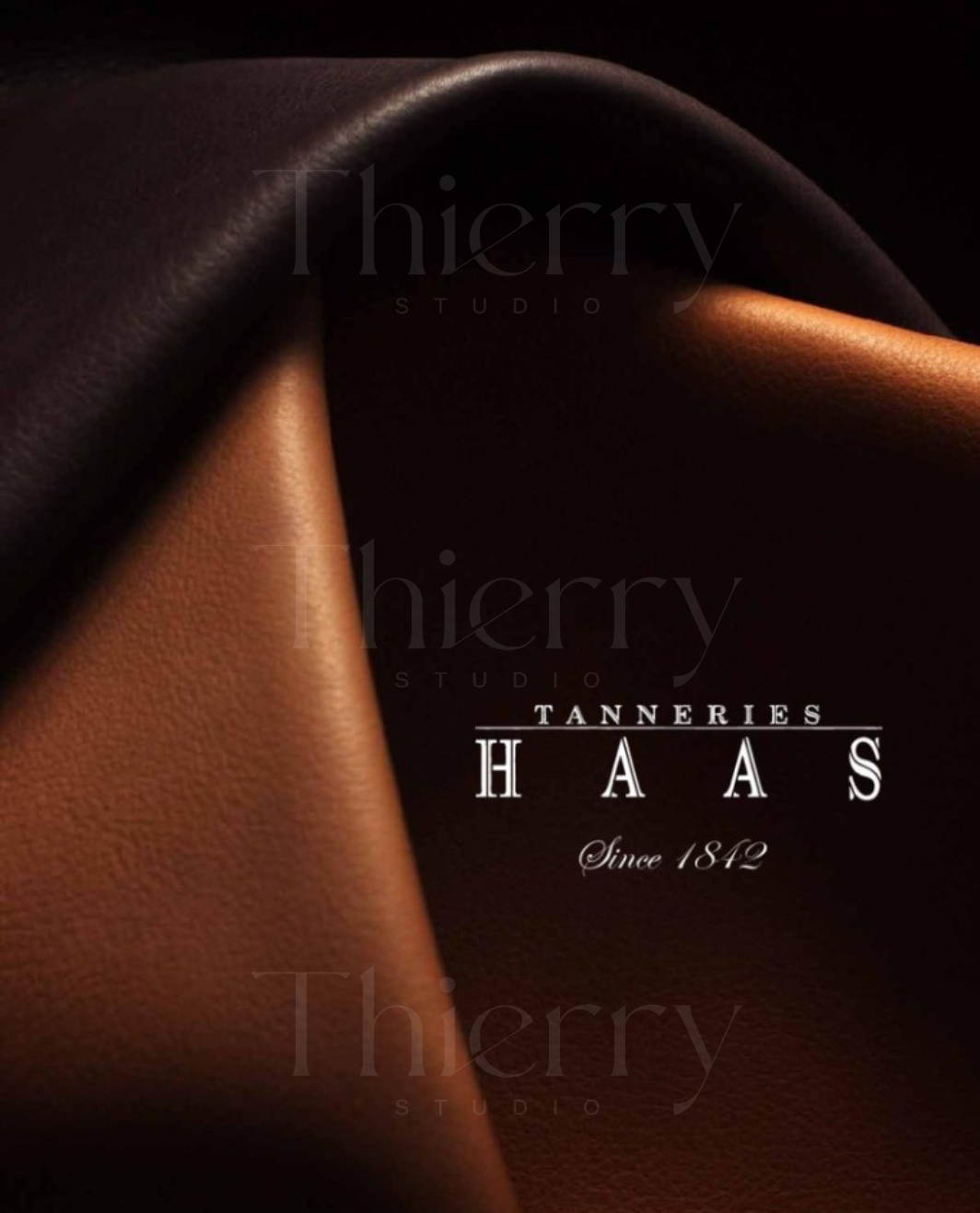
Epsom — HAAS
These are among the tanneries supplying those leathers.
If you have been researching an Hermès-style bag,
you have probably seen seller after seller
claiming that their products
use exactly the same leather as the authentic bags.
Whether online retailers
or Chinese factories,
they need to make a sale,
so they all call their leather “authentic-grade.”

Does that mean
all their products really use the same leather?
Of course not.
In 99% of cases, they are probably saying whatever helps make a sale.
Anyone can make a claim.
Please do not simply accept it at face value.
If they use the same leather as the original,
they should be able to prove it.
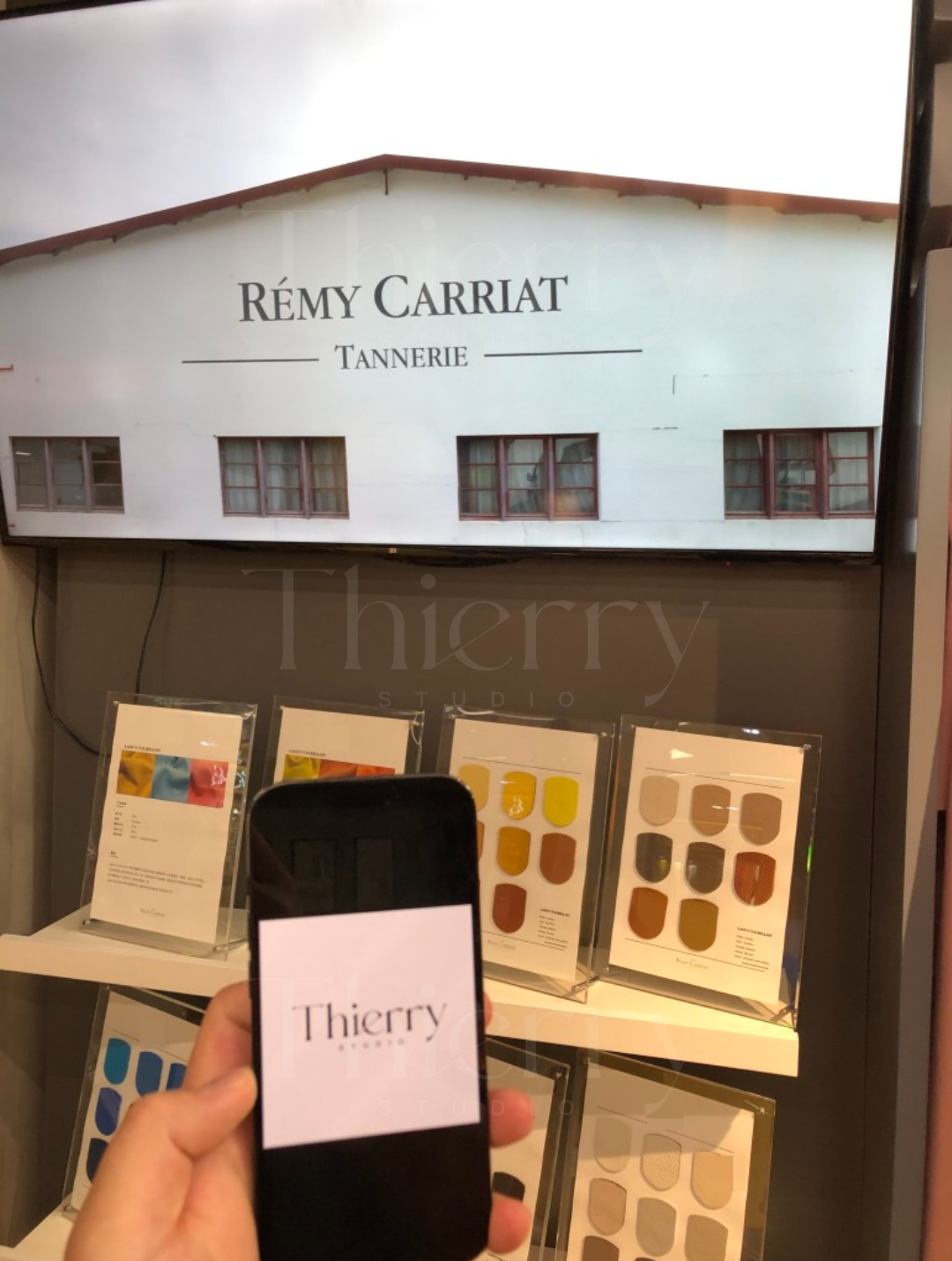
(Sourcing evidence) Clemence — Rémy Carriat
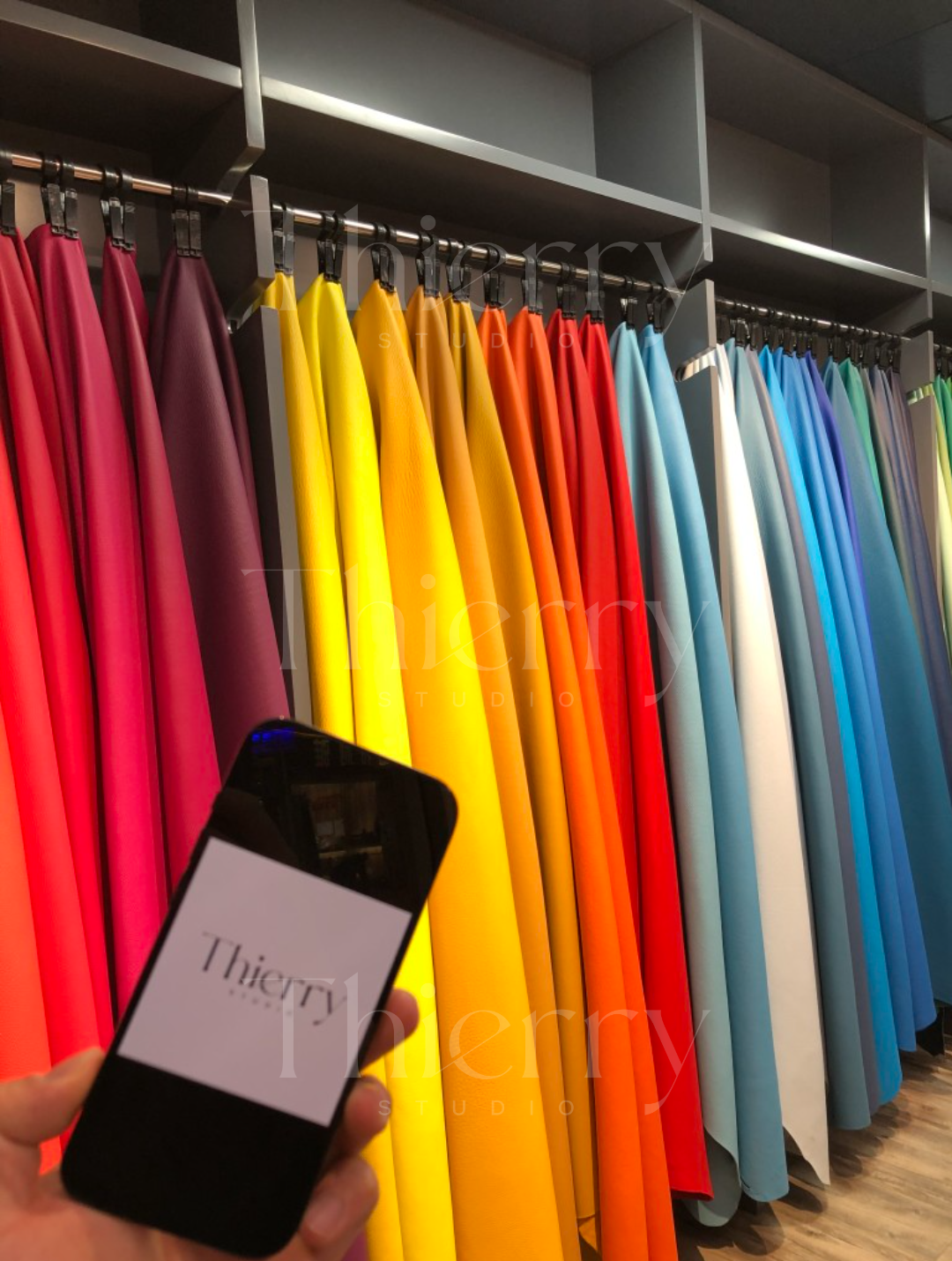
(Sourcing evidence) Clemence — Rémy Carriat
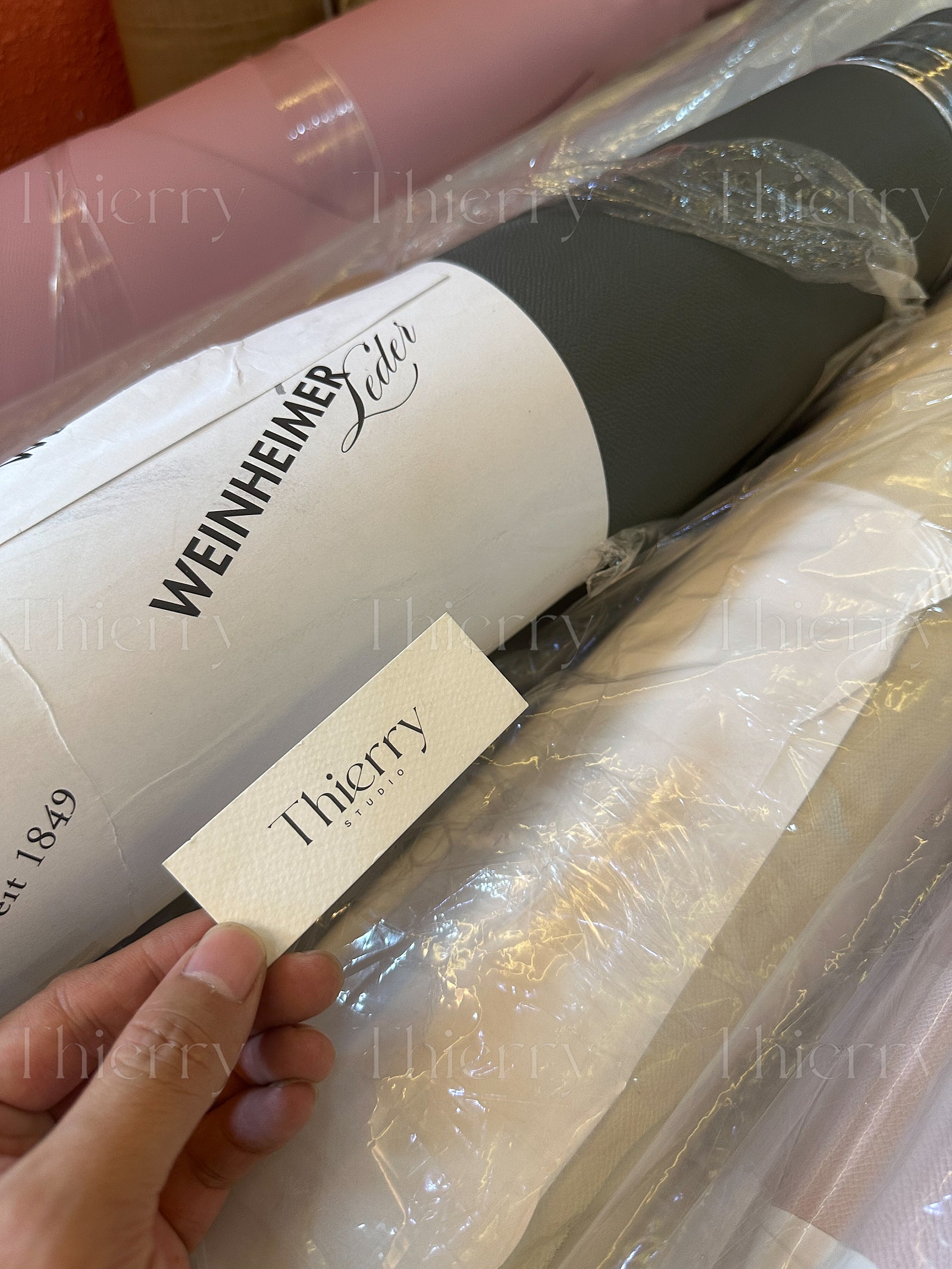
(Sourcing evidence) Togo — Weinheimer Odessa Calf
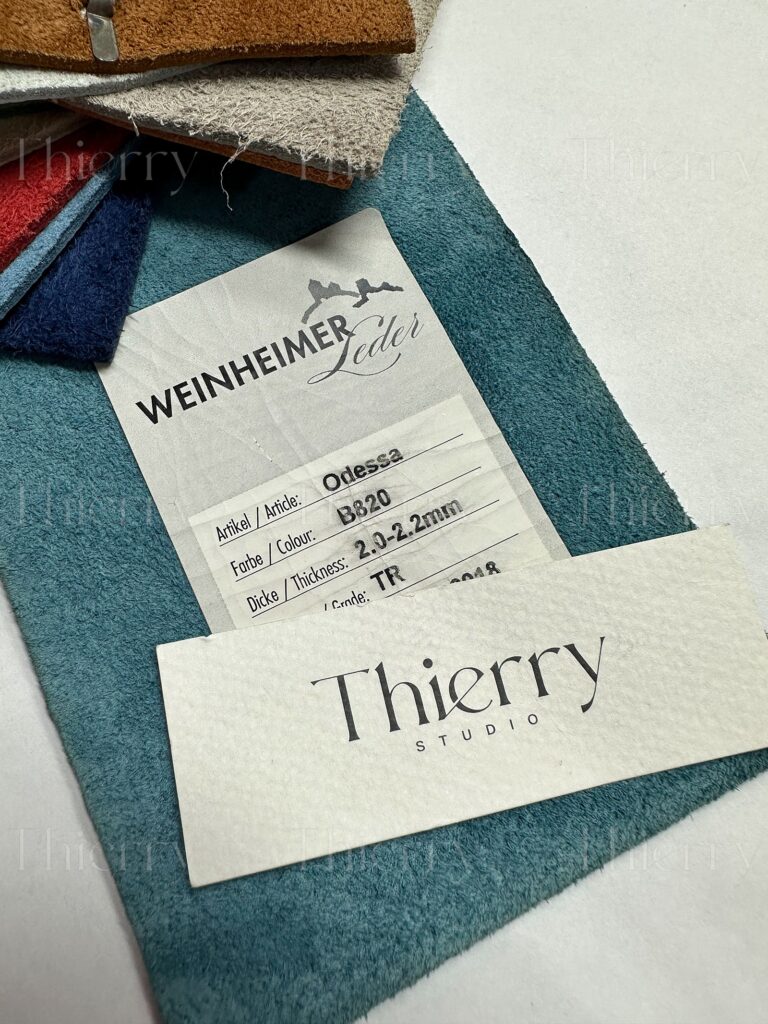
(Sourcing evidence) Togo — Weinheimer Odessa Calf TR (Tannery Run)
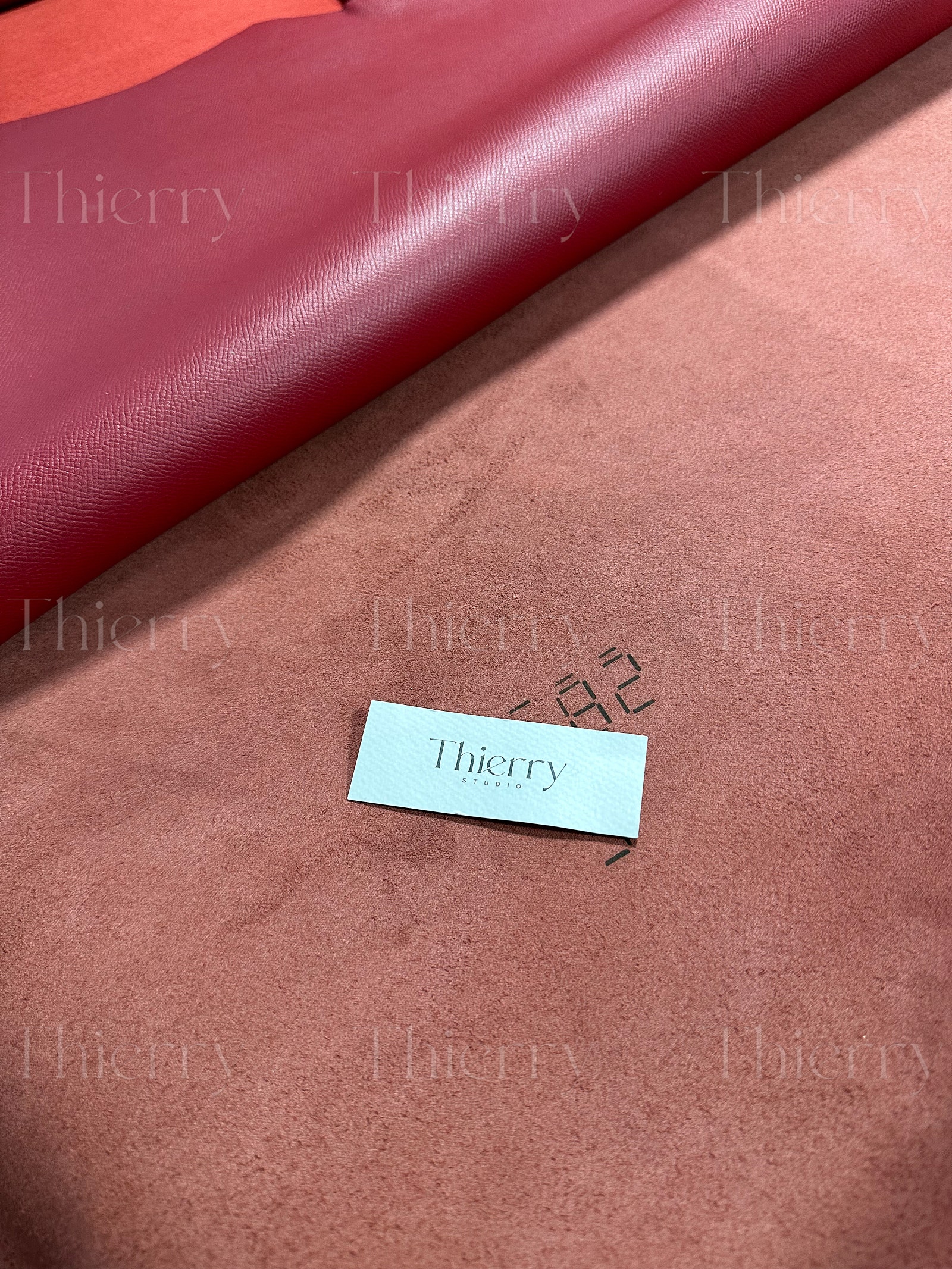
(Sourcing evidence) Epsom — HAAS
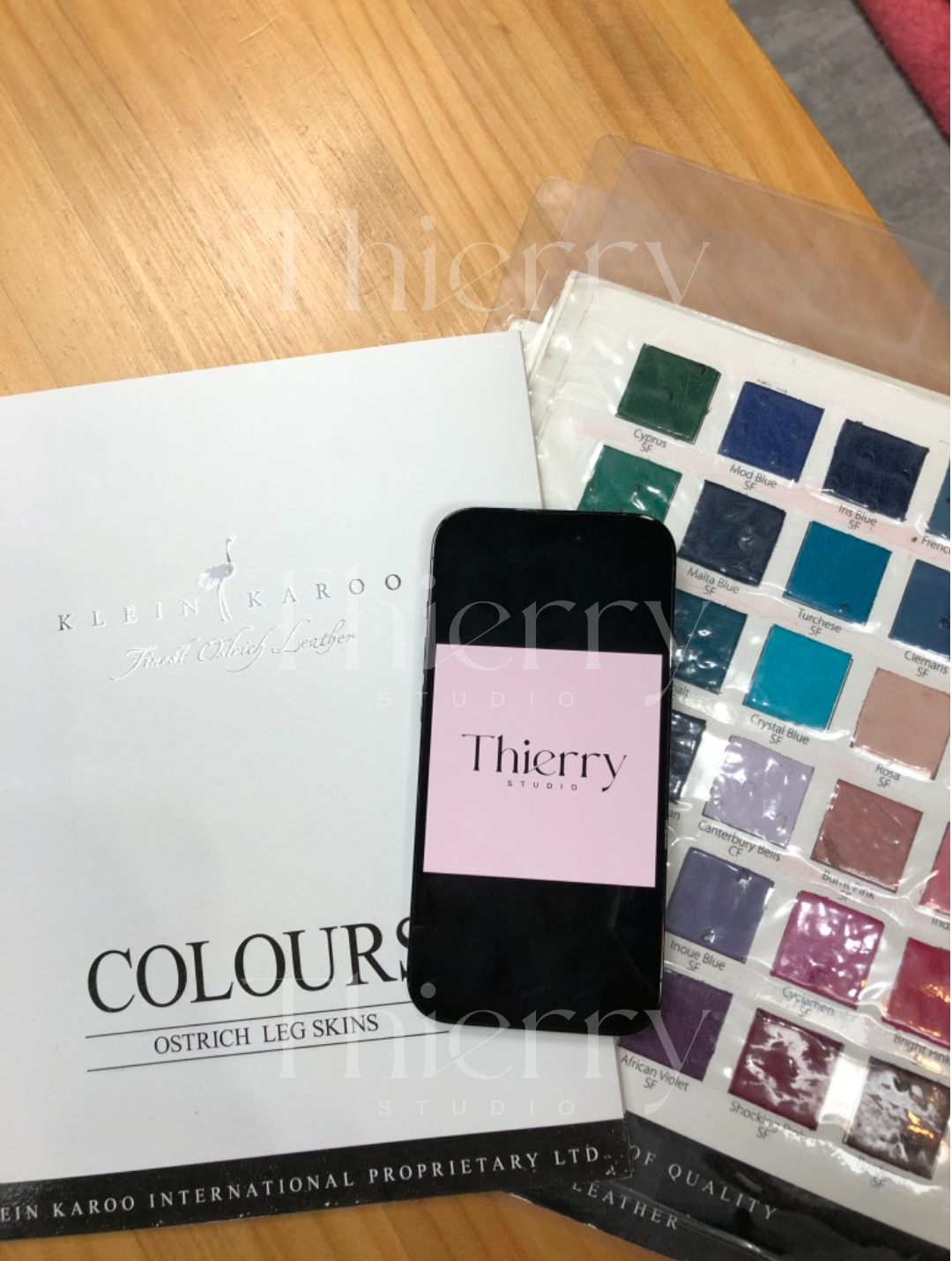
(Sourcing evidence) Ostrich — KK
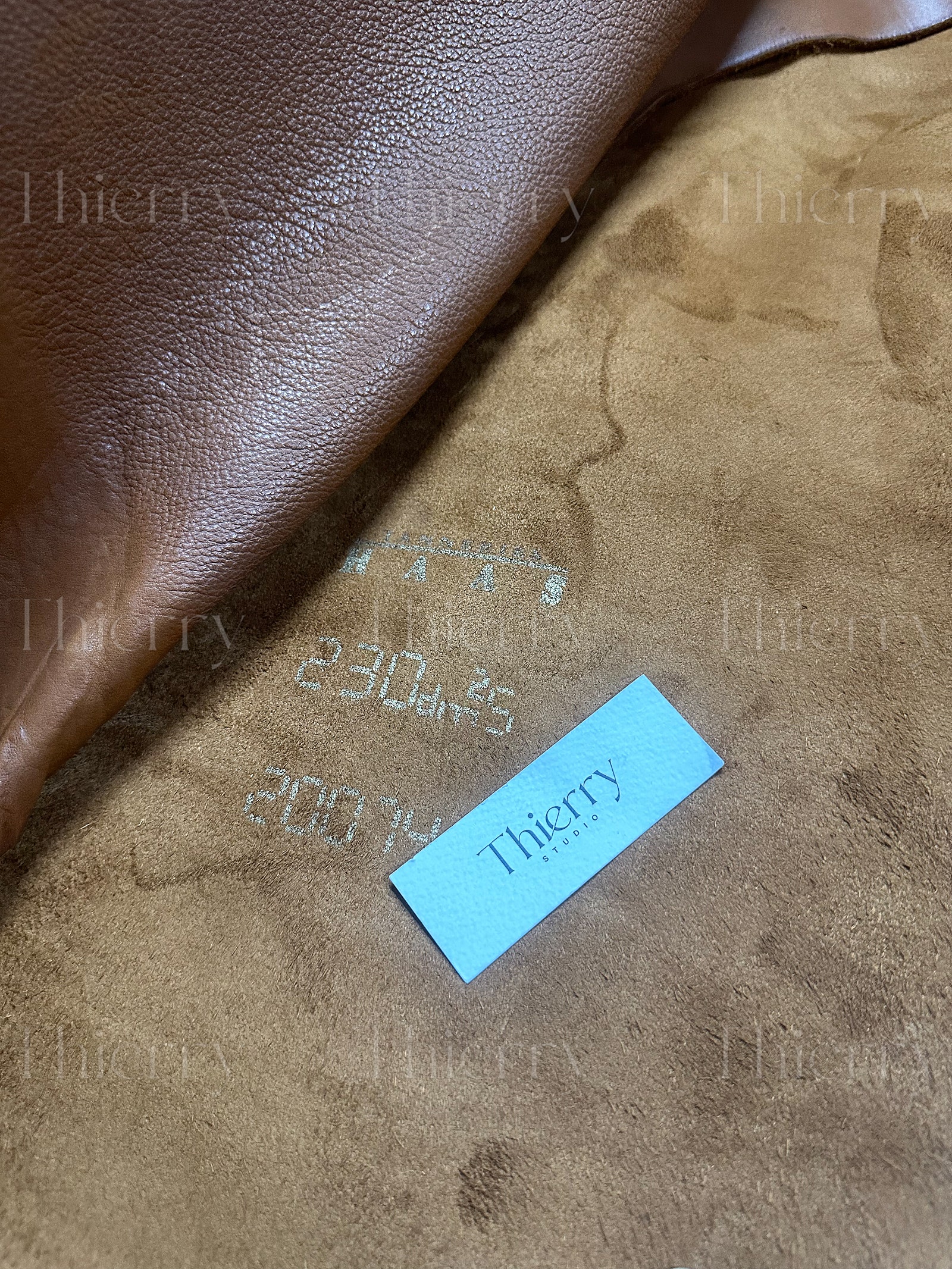
(Sourcing evidence) Barenia — HAAS
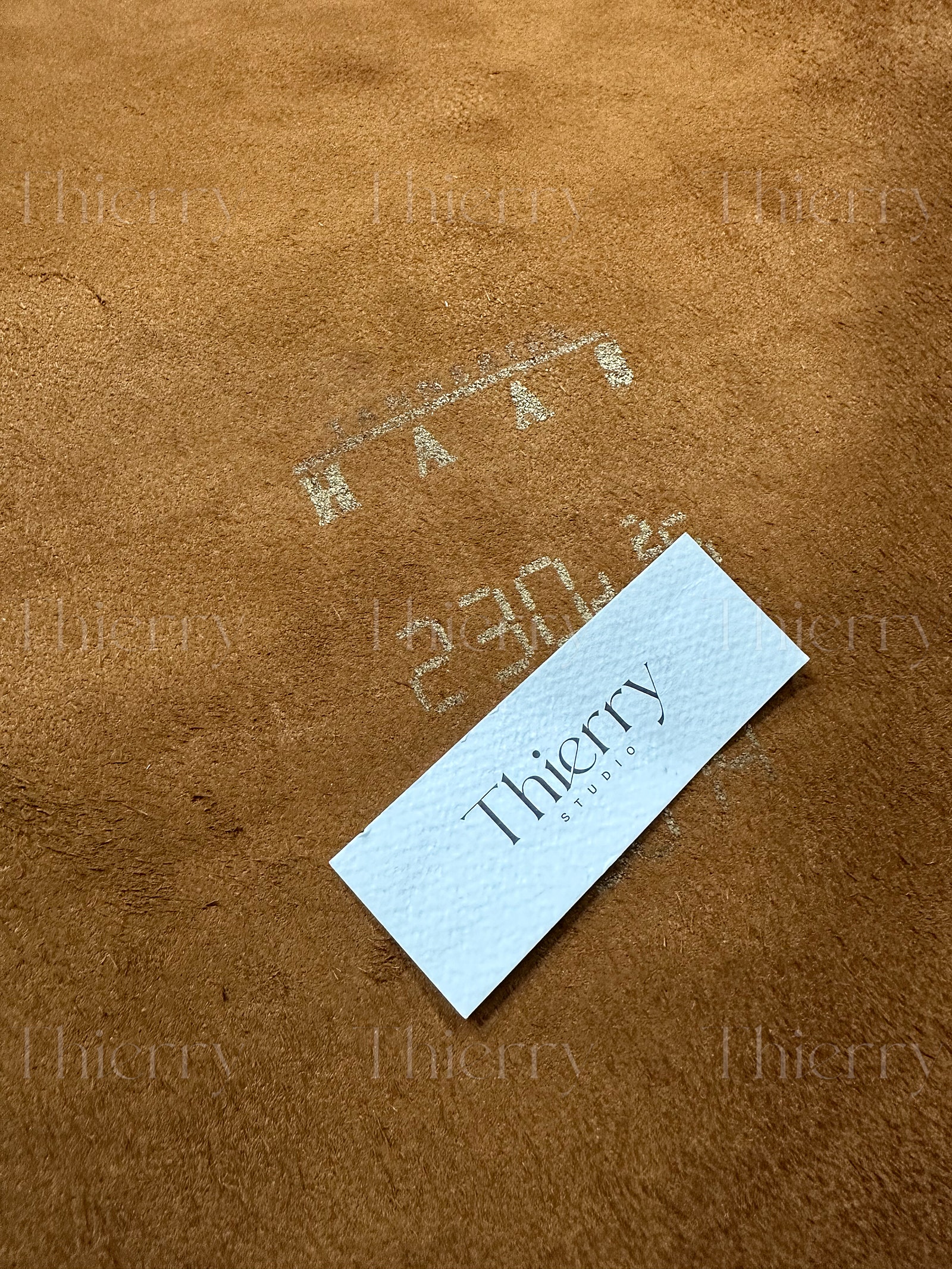
(Sourcing evidence) Barenia — HAAS
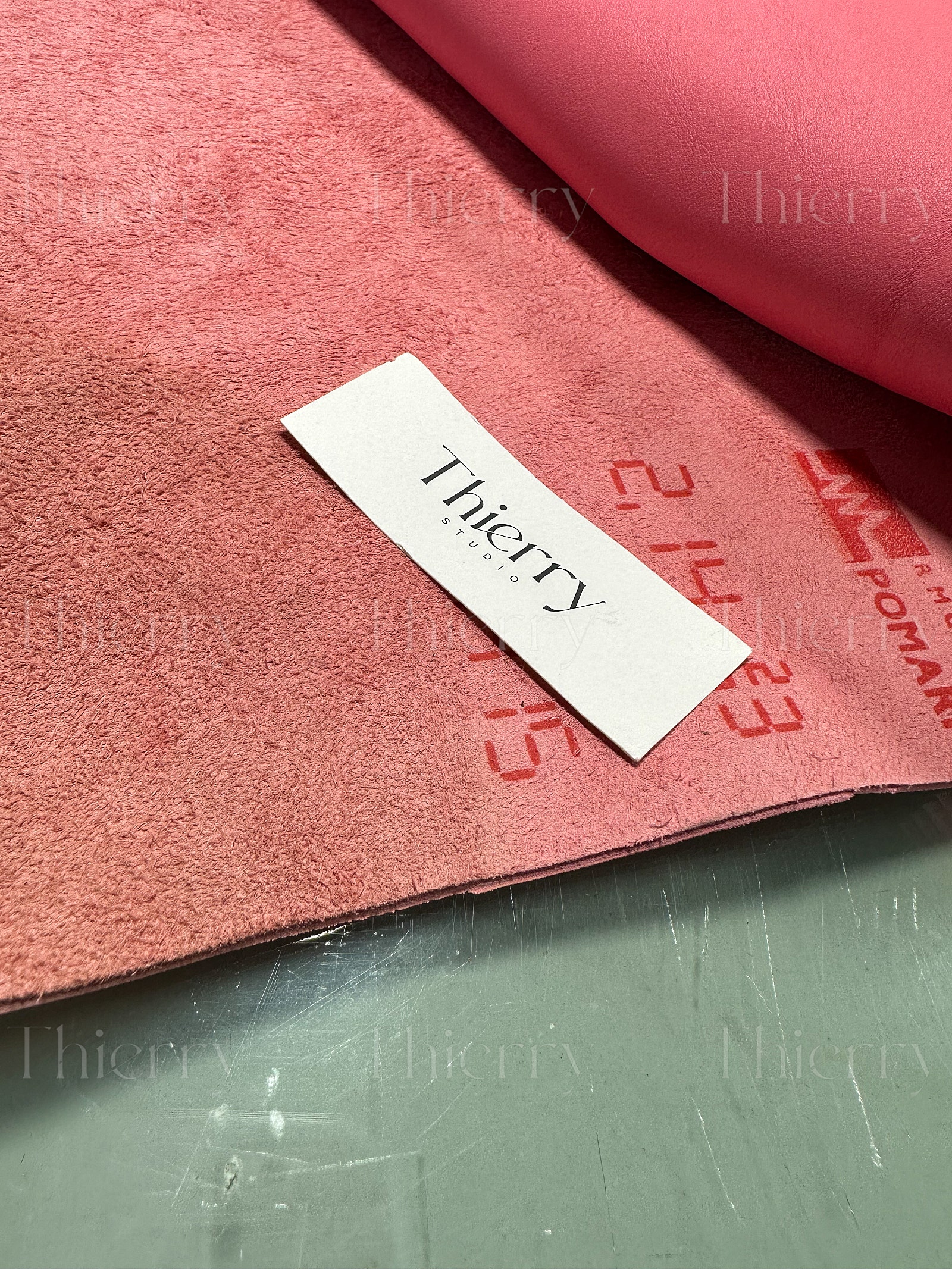
(Sourcing evidence) Swift — POMARI
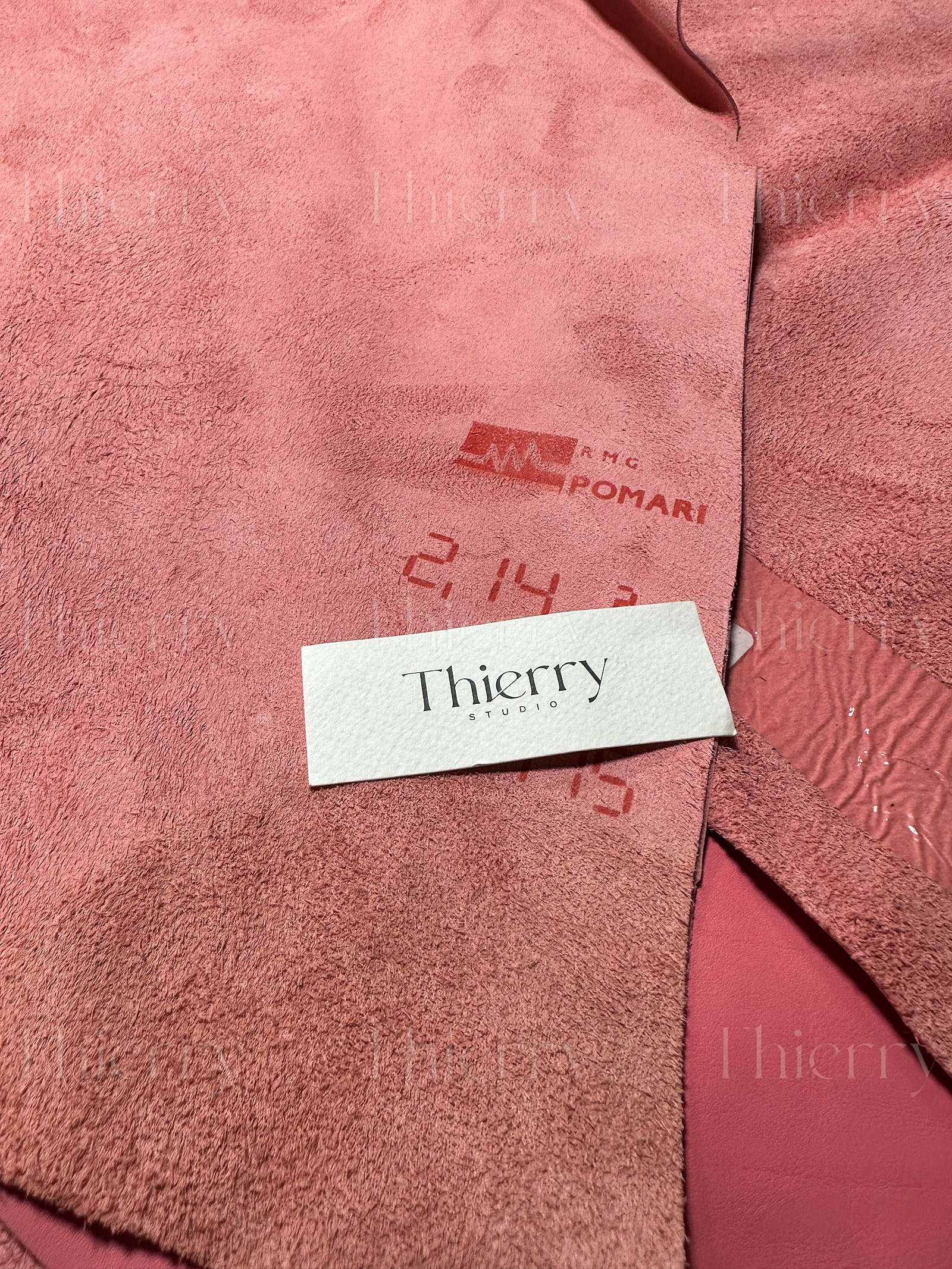
(Sourcing evidence) Swift — POMARI
If they genuinely use this leather in production,
they should be able to photograph it with a phone or note displaying their business name.
Even that is only the minimum evidence.
Photos showing the leather stored at the factory or workshop,
and actually being used in production, would make the evidence more complete.
We can show you those.
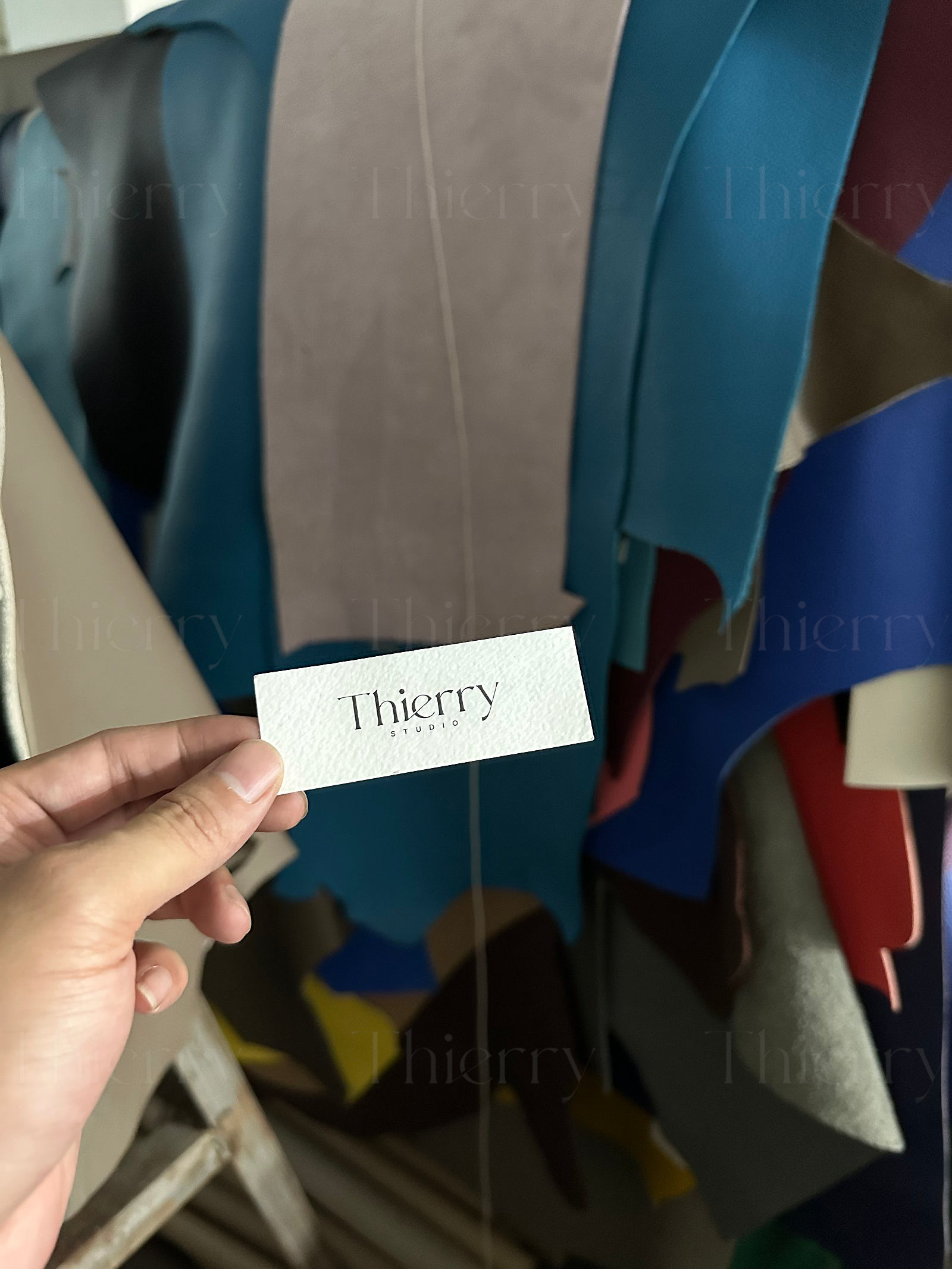
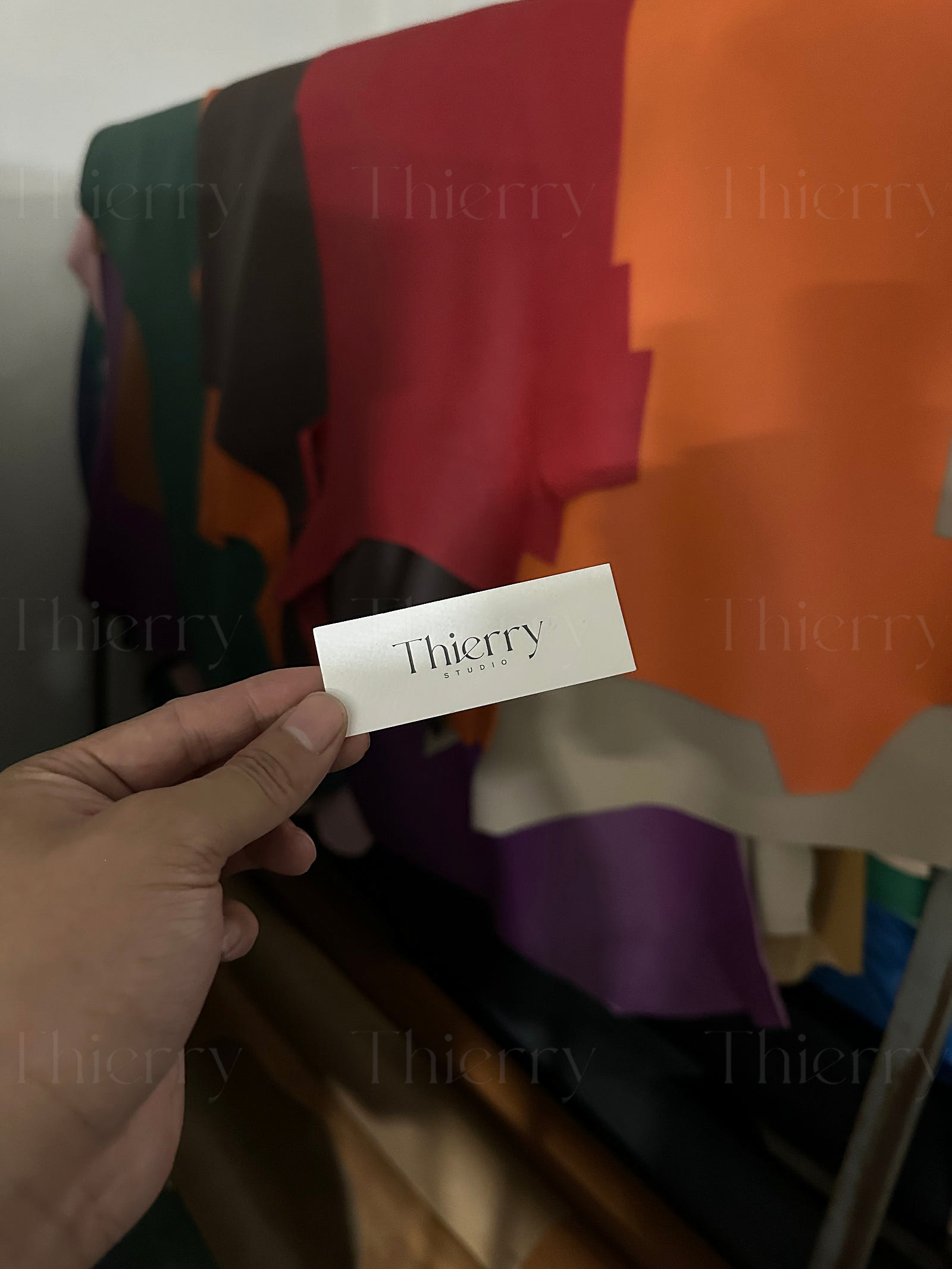
Beyond a generic leather photo,
there should be something verifiable, such as an Instagram account or phone screen,
to establish whose materials they are.
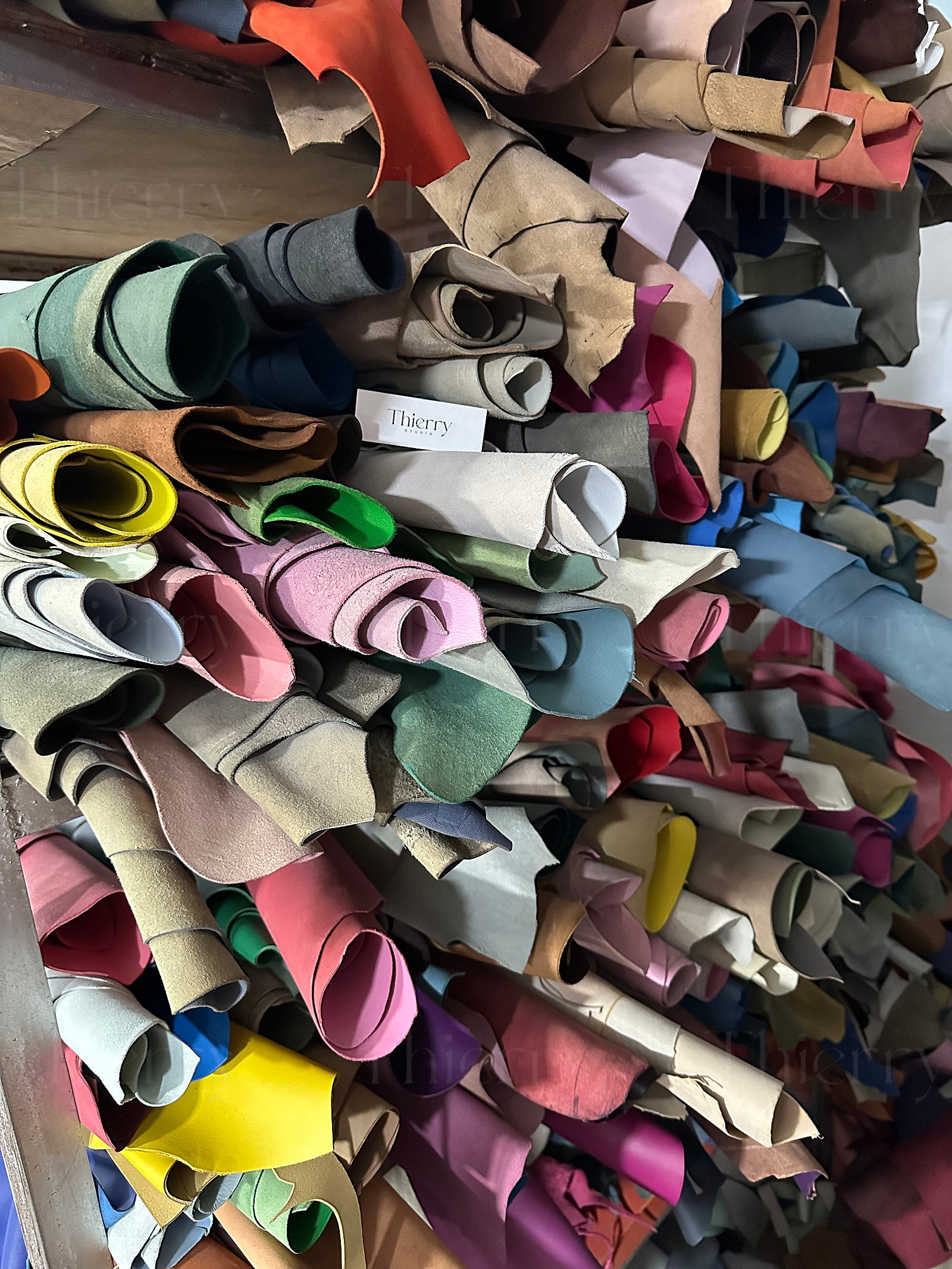
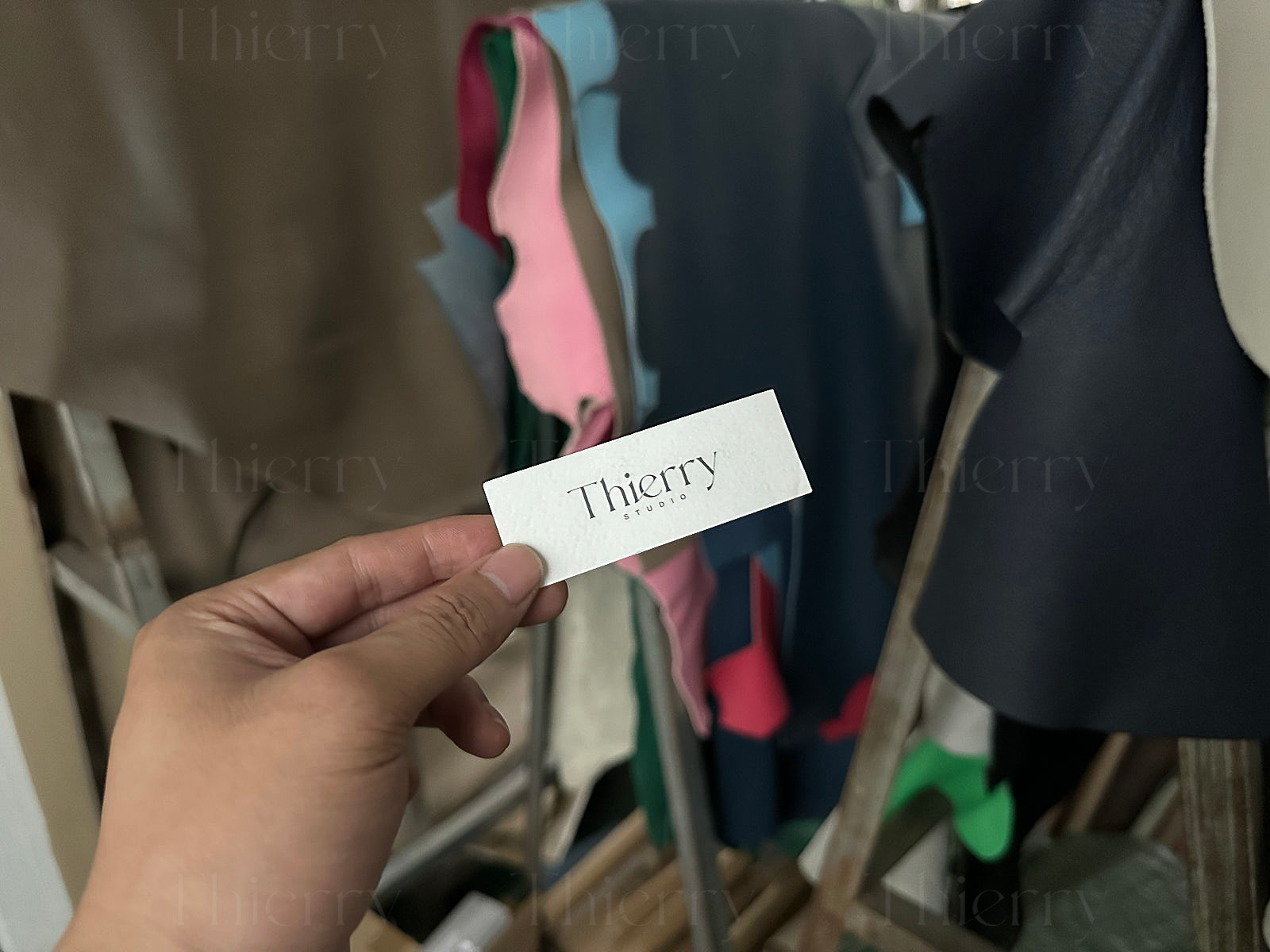
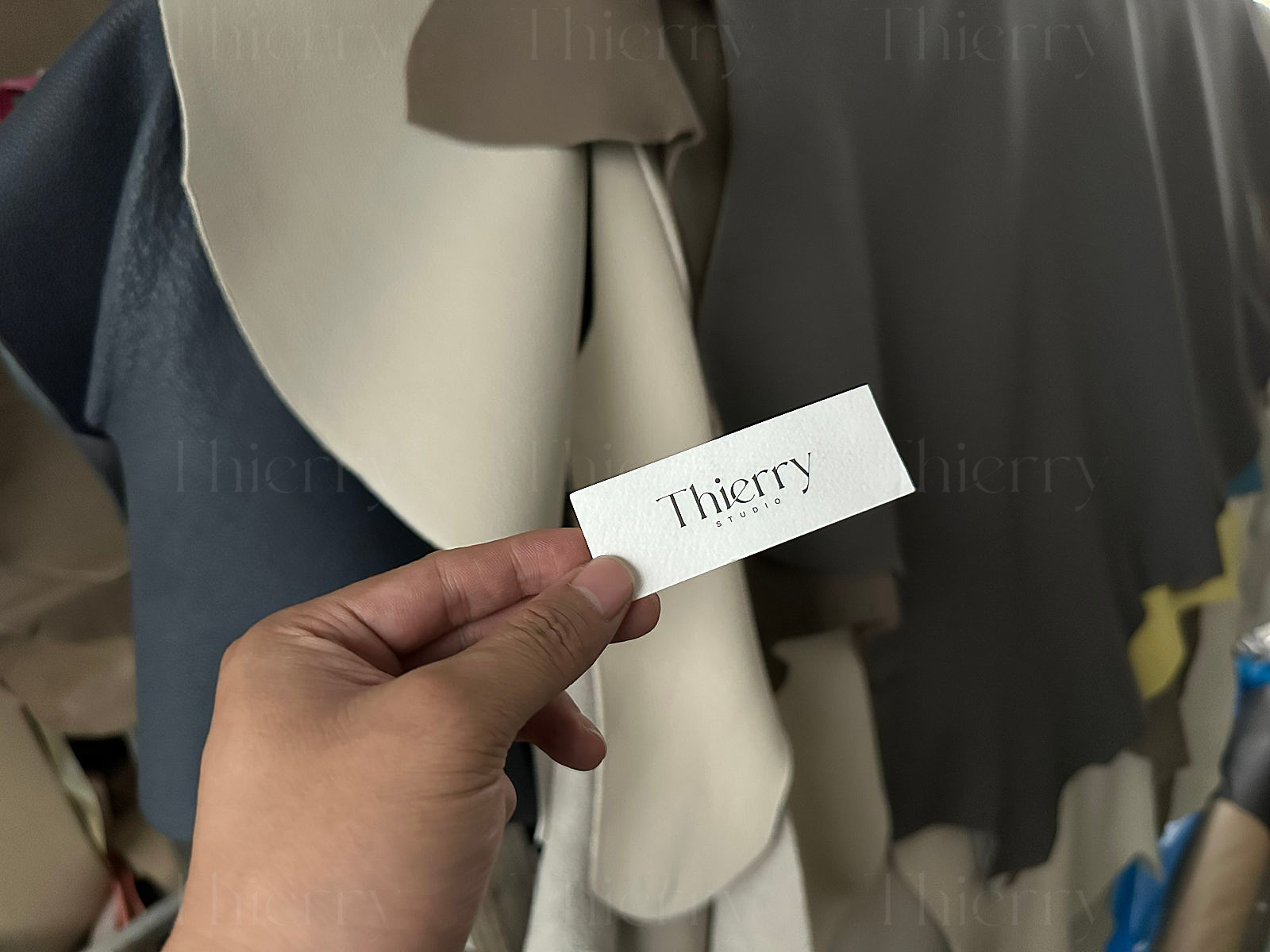
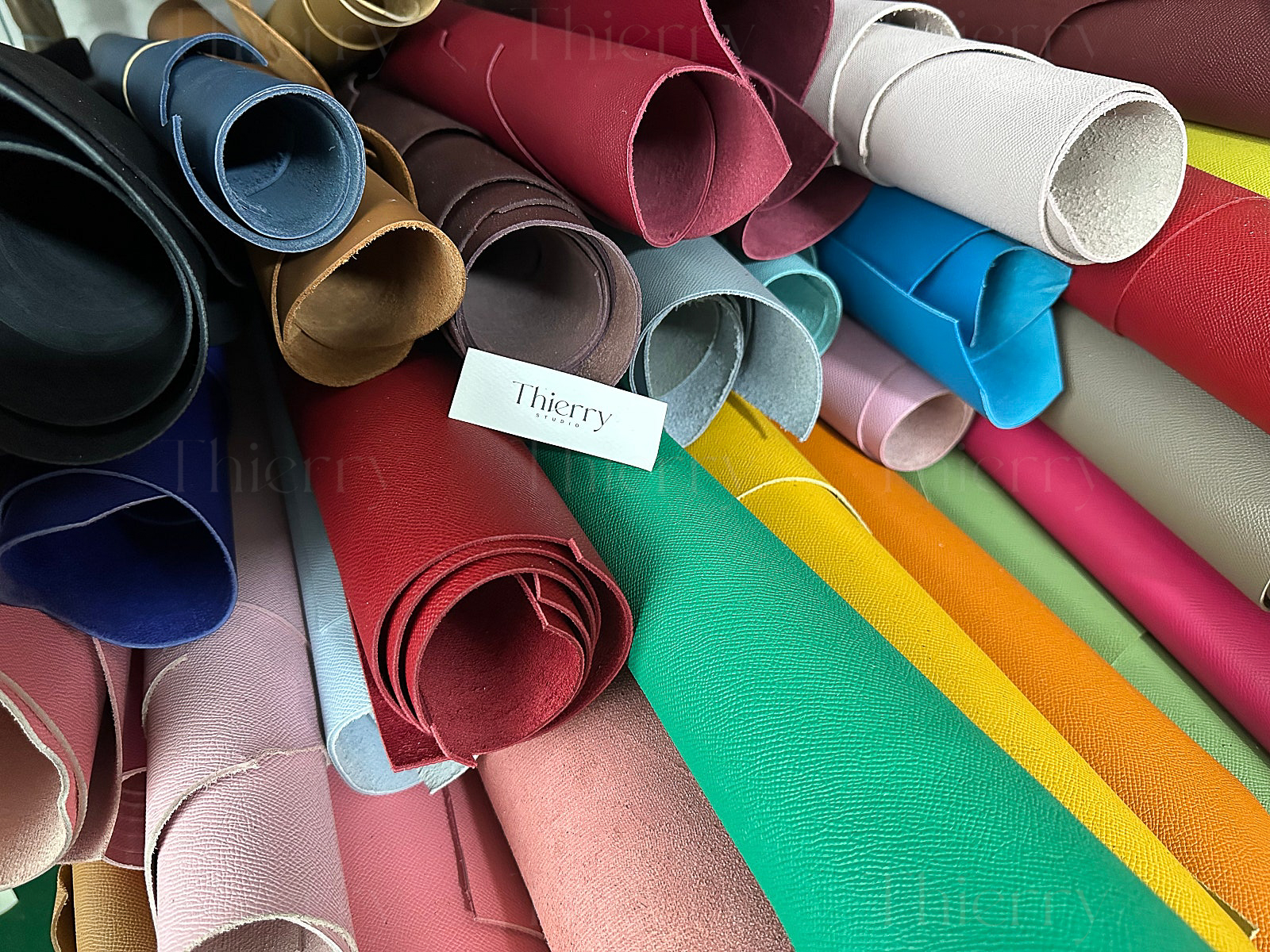
Epsom hides in storage (HAAS)
Even if you do not buy from us,
please ask any seller claiming to use the original leather to provide evidence.
They are unlikely to be able to show you this.
In most cases, sellers simply buy and resell market products.
Some factories may not allow photographs,
but at the very least,
there should be a photo of the leather alongside
the seller’s logo, blog or Instagram account.
Let me emphasize this once more:
Thierry Studio
does use the same leather as authentic Hermès bags,
and we can substantiate that.
So what happens when a bag does not use that leather?
What are the issues with products made from Chinese leather?
Chinese leather has improved in quality over the years,
and some examples initially have a very similar feel and sheen.
They can be hard to distinguish by eye,
and sometimes even by touch.
Let’s look at a few bags made with Chinese leather.
No. 1: partly handmade, retailing for around US$450–600
No. 2: partly handmade, retailing for around US$600–890
No. 3: fully handmade, retailing for around US$1,120–2,240
After seeing all three, you may wonder what the differences are.
I can usually tell by looking,
feeling the leather and examining the details.
But most people have not handled much leather
or seen many authentic bags, so it is difficult.
Without that experience,
you might buy a bag costing around US$750
and think, “This looks just like the original—it’s great!”
It can look good when it first arrives. Nothing seems wrong.
Then you encounter an authentic bag and stop in your tracks.
“So this is what the original feels like… Why is mine so stiff—or so soft? The surface feels completely different, and the way it slouches looks odd.”
You may wish you could hide it away.
And bags made with Chinese leather can develop problems with use
A bag made with the original leather gradually settles into a beautiful shape as it breaks in,
whereas Chinese leather
may stiffen,
become too soft,
lose its shape excessively,
peel easily,
or discolor unevenly, among other issues.
Is it really reasonable to expect no quality difference
between the leather used in authentic bags and these Chinese alternatives?
The price difference is considerable…
Surely there is a difference in quality too.
Even leather labels can be counterfeited.
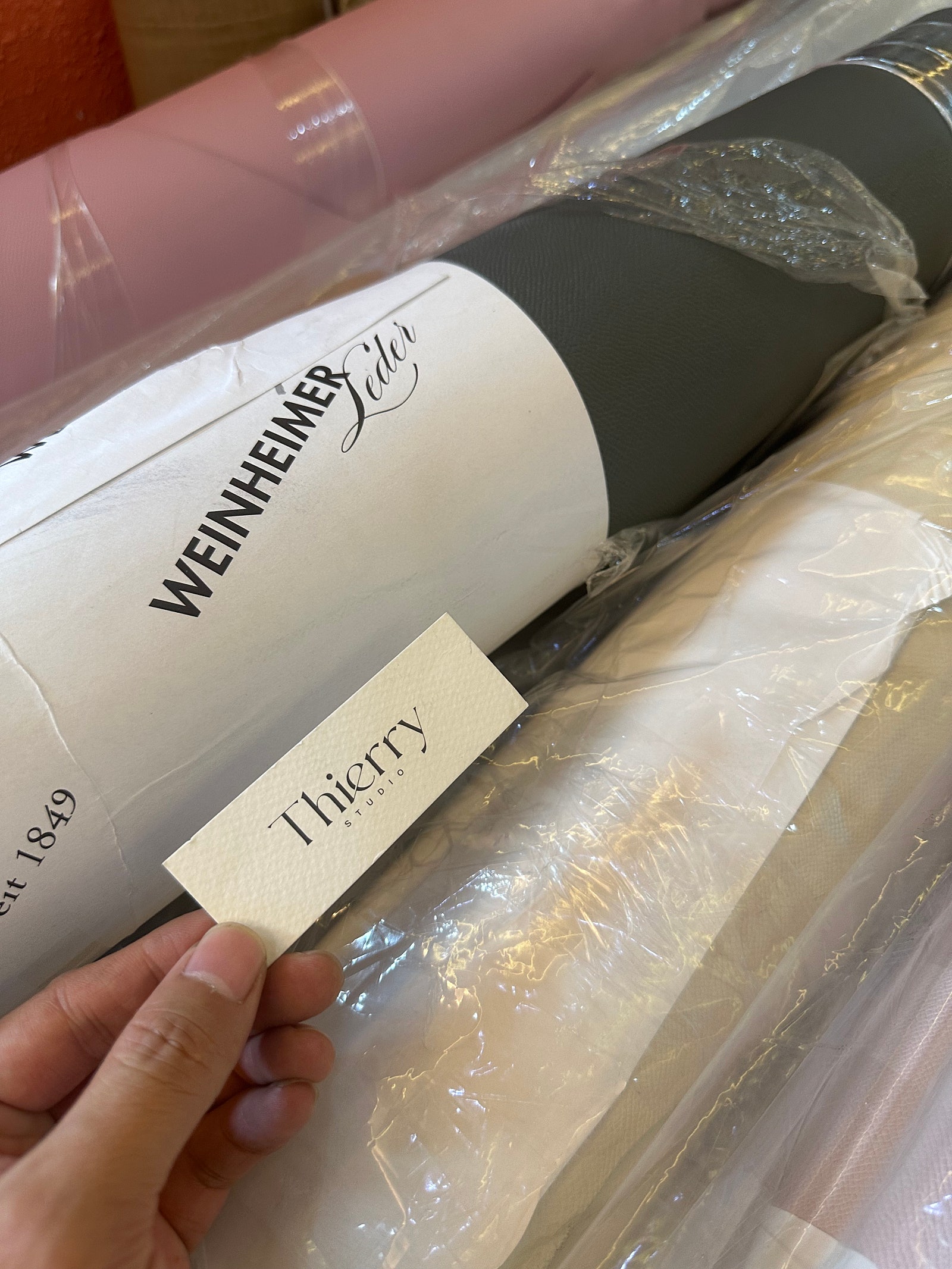
Just because the wrapping carries a Weinheimer, HAAS or Rémy Carriat label
does not mean the leather actually came from that tannery.
Deception happens at every level.
Never rely on words alone!
I learned that the hard way at first.
That is why the maker’s eye matters.
You need the experience to recognize the genuine material.
I worked very hard to develop that judgment.
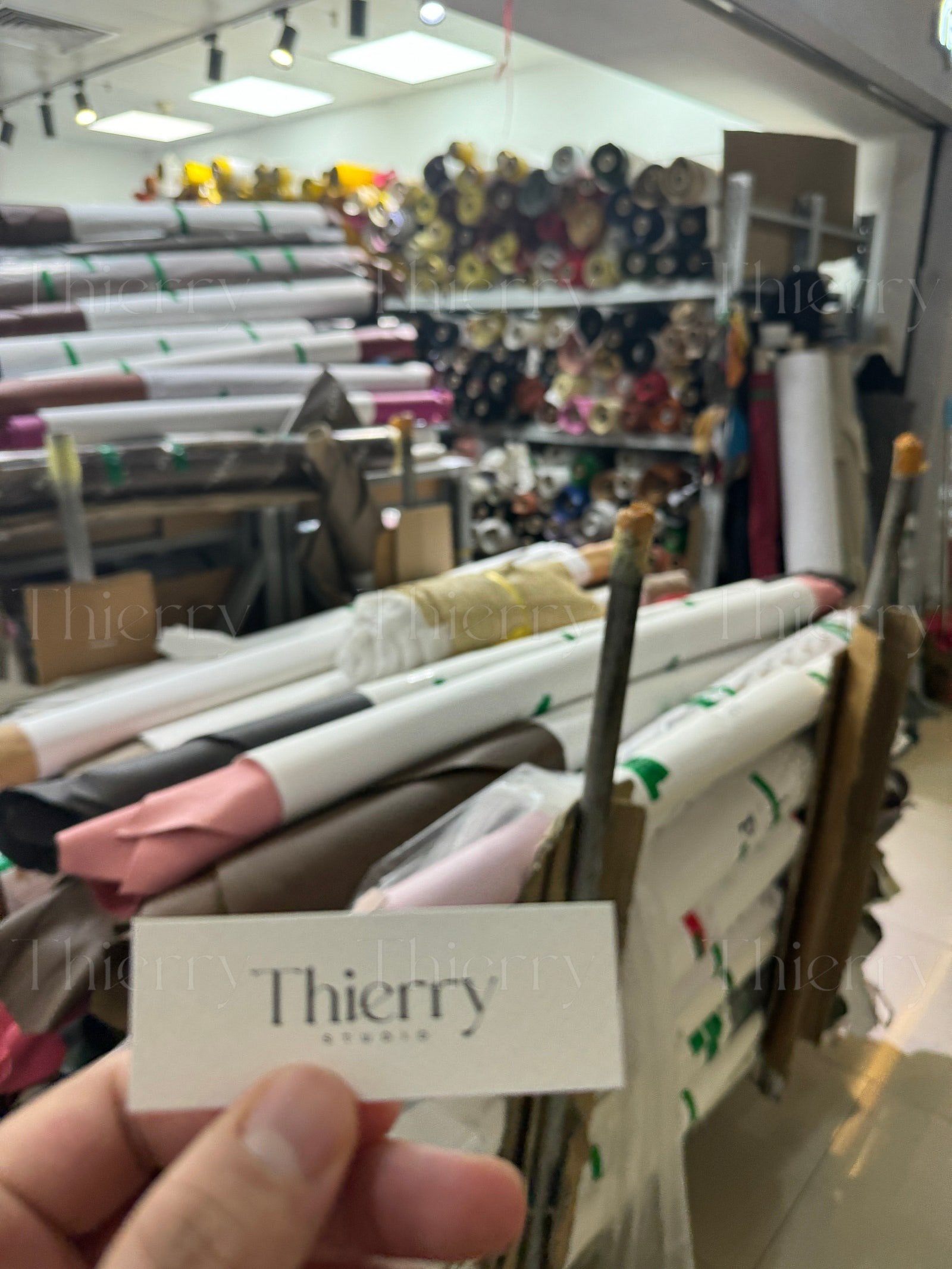
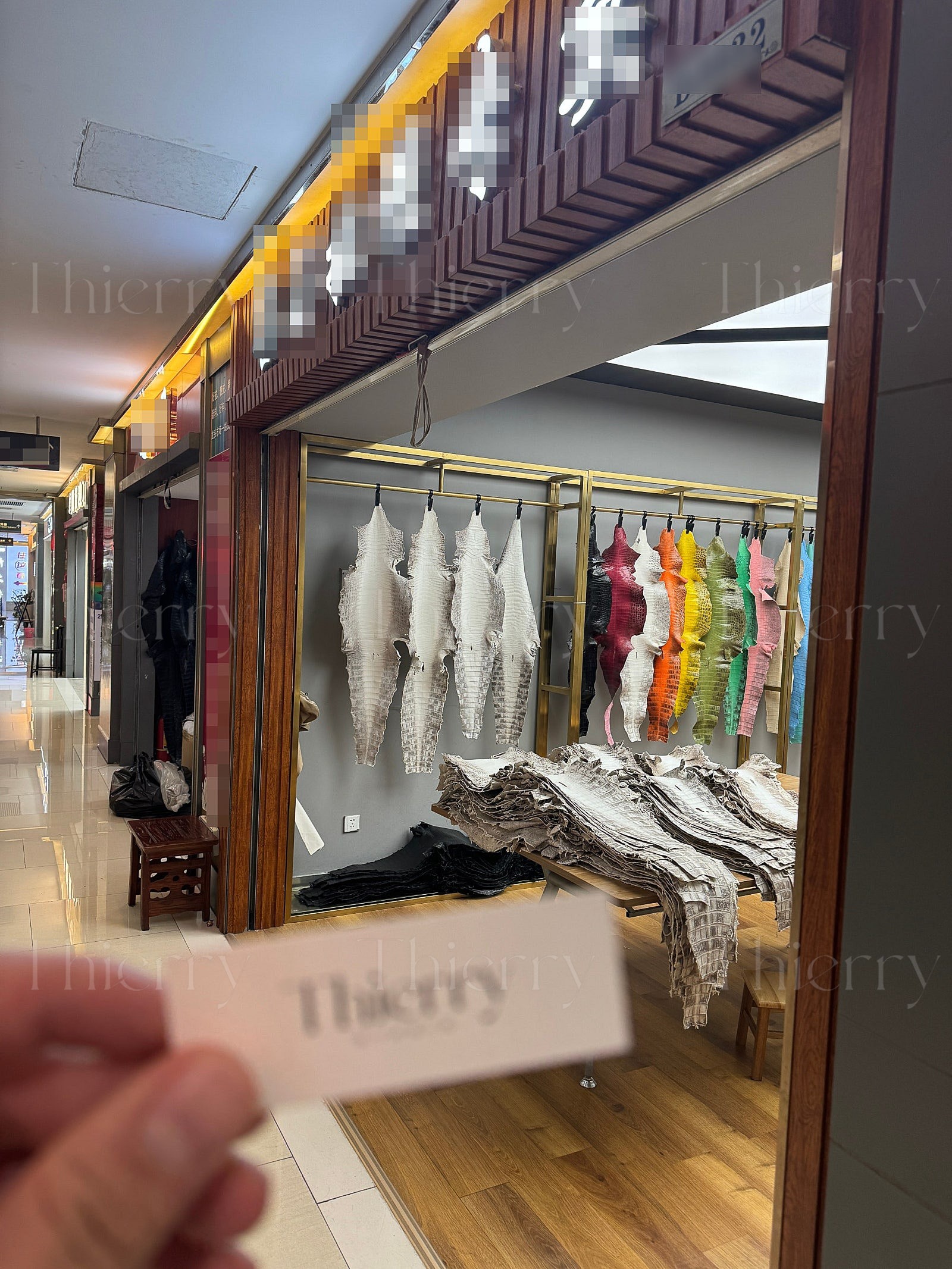
I visited leather markets every day looking for the right hides.
Once, someone claimed to sell the original leather,
but when I took it to the workshop, it turned out to be an imitation.
I realized I needed to be able to judge the leather myself,
so I began attending the Hong Kong leather fair every year.
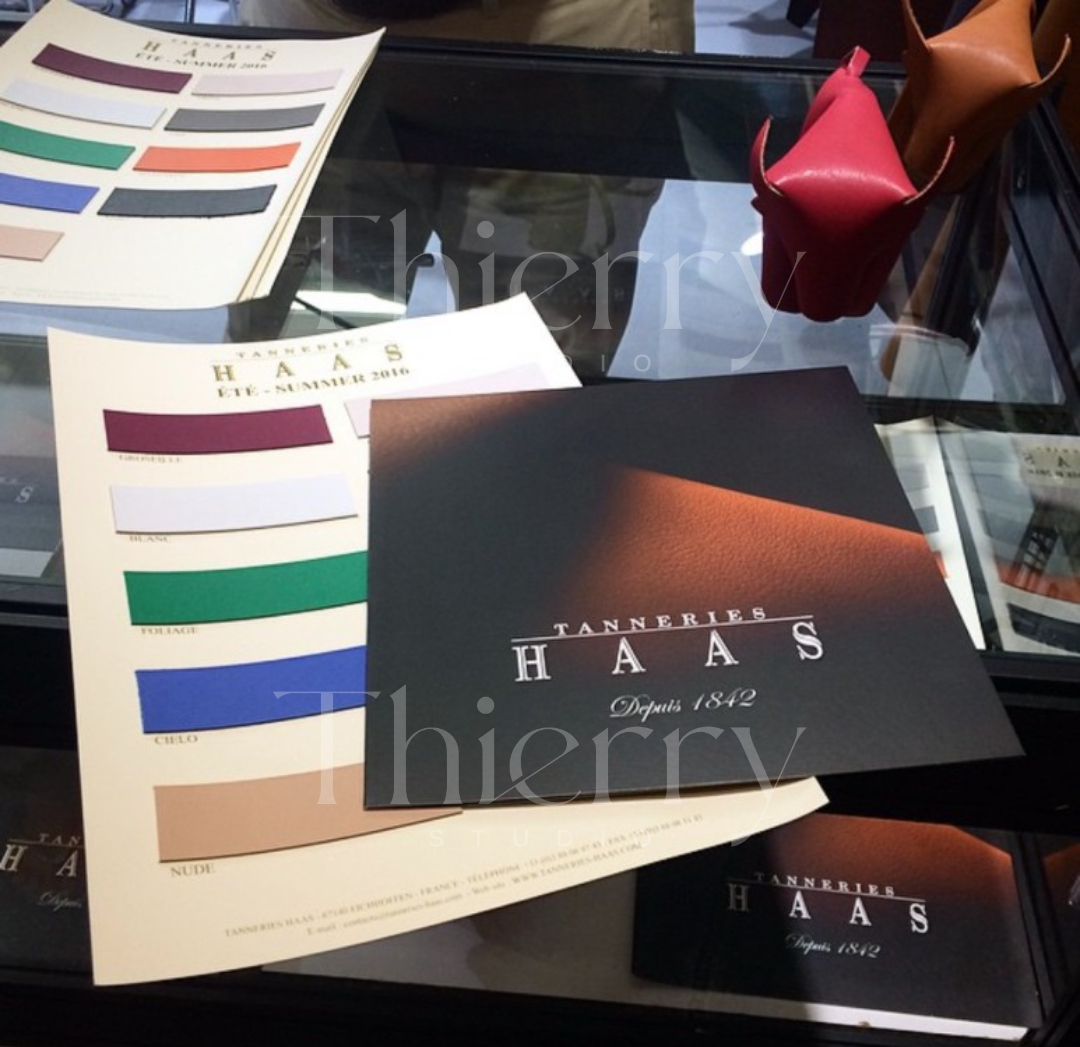
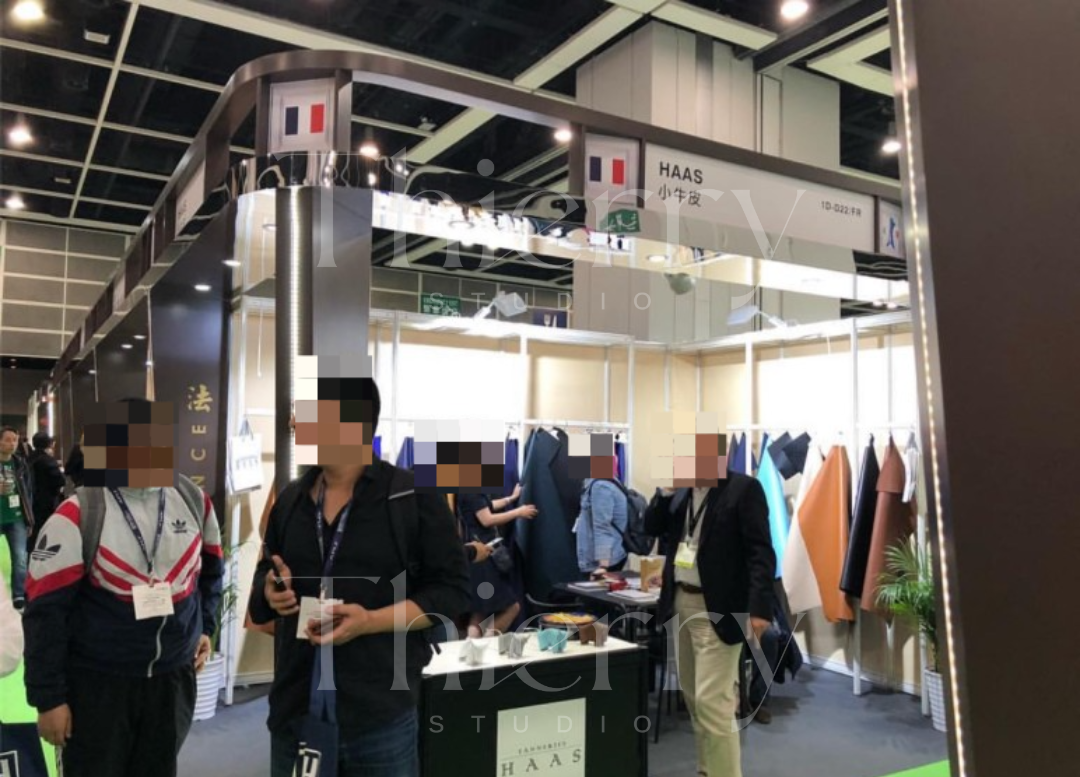
I went again this year, in 2024.

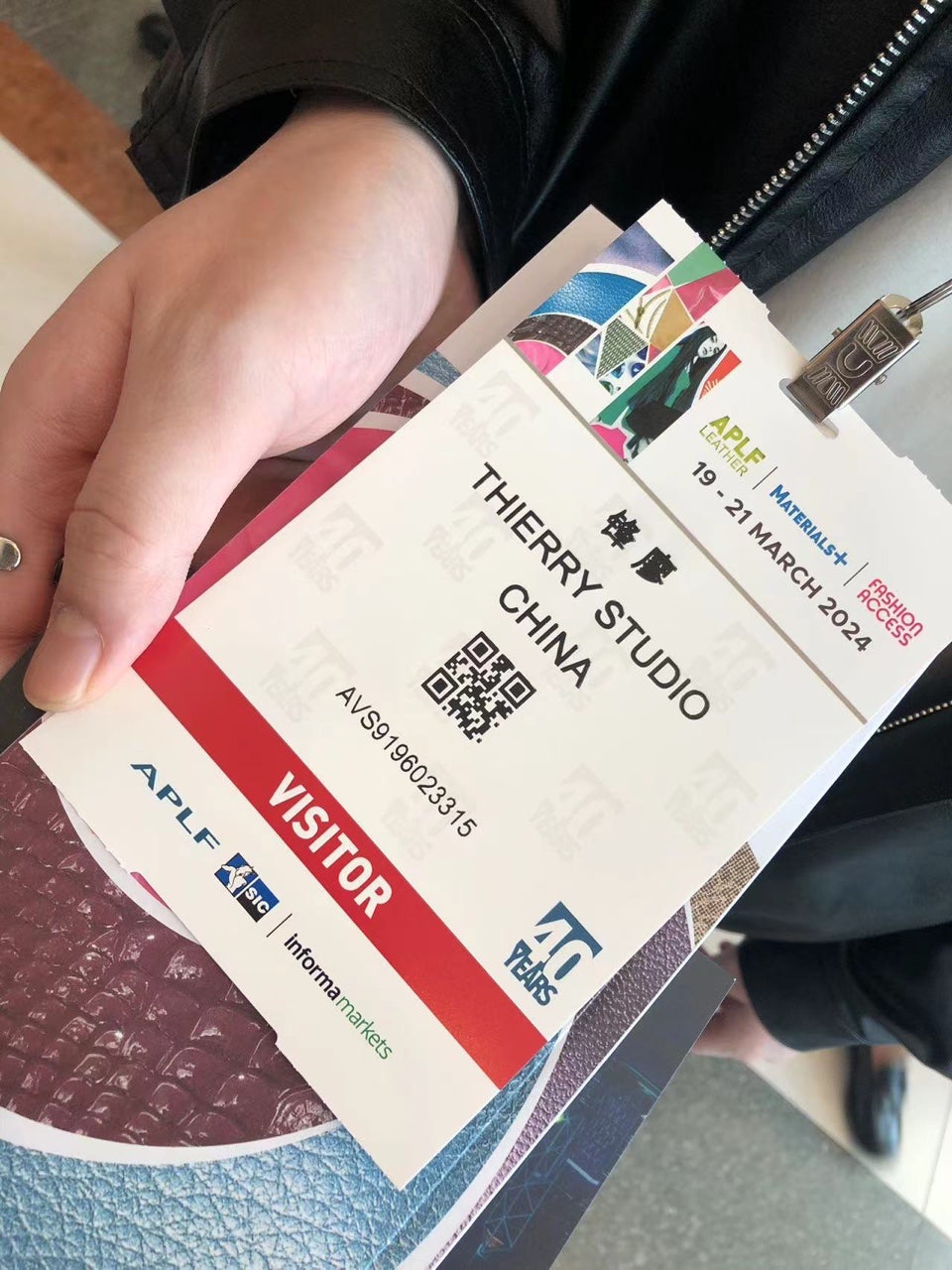
You can see “Thierry Studio” here.
At the leather fair,
well-known tanneries set up booths
and display their leathers,
so you can touch and examine them yourself.
The more you see and handle,
the better you become at telling them apart.
We now have trusted leather suppliers,
and sourcing the right leather is no longer a concern.
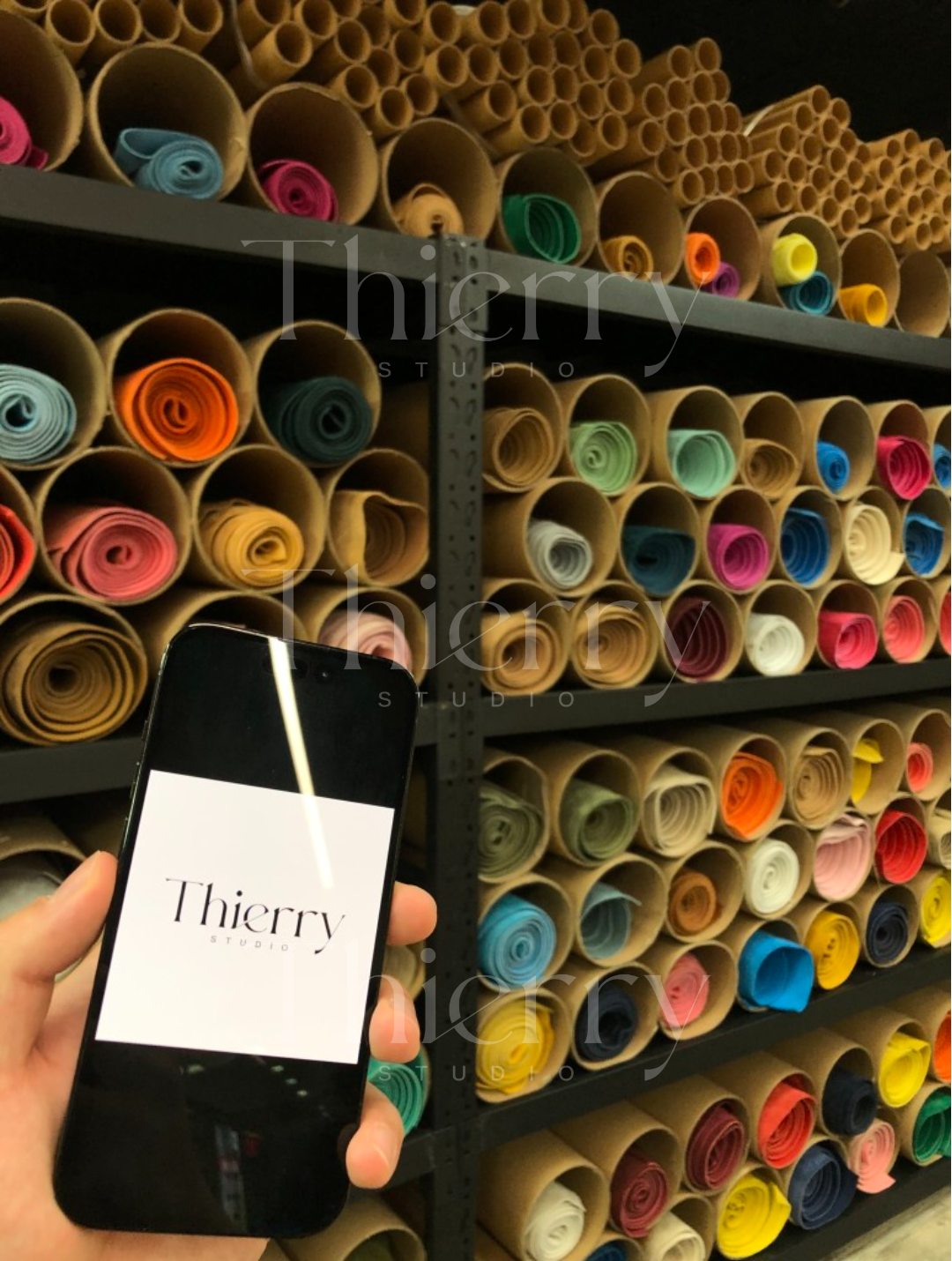
Our customers
can be confident about the leather Thierry Studio uses.
There is something else just as important.
It is this:
even among genuine hides, we must select the best ones
.
Every hide differs in quality.
Let me show you why it matters to inspect them in person.

These are Clemence hides from Rémy Carriat.
The hide on the right has a larger grain,
while the one on the left has a smaller grain.
Sometimes the grain size
differs too much from what is typical,

or the grain is uneven and broken into small, crowded clusters.
There may also be tiny marks or scars.
Just as people’s skin varies in smoothness and scarring, leather does too.

Every single hide is different.
Even within the same TR supply, each hide varies,
and you cannot make a perfect bag from a poor hide.
* TR (Tannery Run) means hides are sold together after production without being sorted into individual grades.
When sourcing,
I first look over the hides and select the better ones.
Then I spread each selected hide out
and inspect it closely, deciding which areas are suitable for the bag.
I do not simply hand leather to the workshop and leave everything to them.
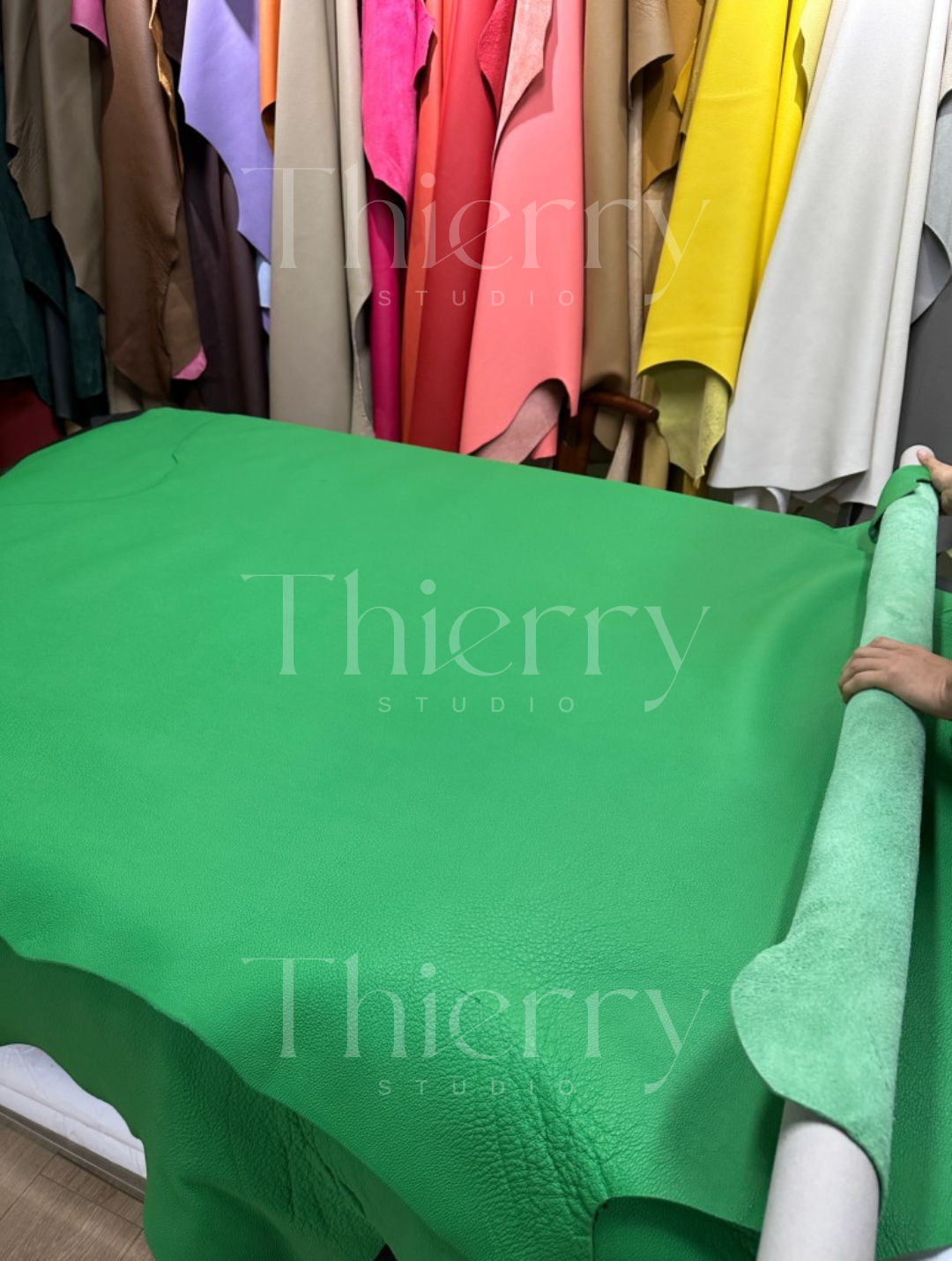
In the photo above,
the head and neck area is on the right,
and the rear of the hide is on the left.
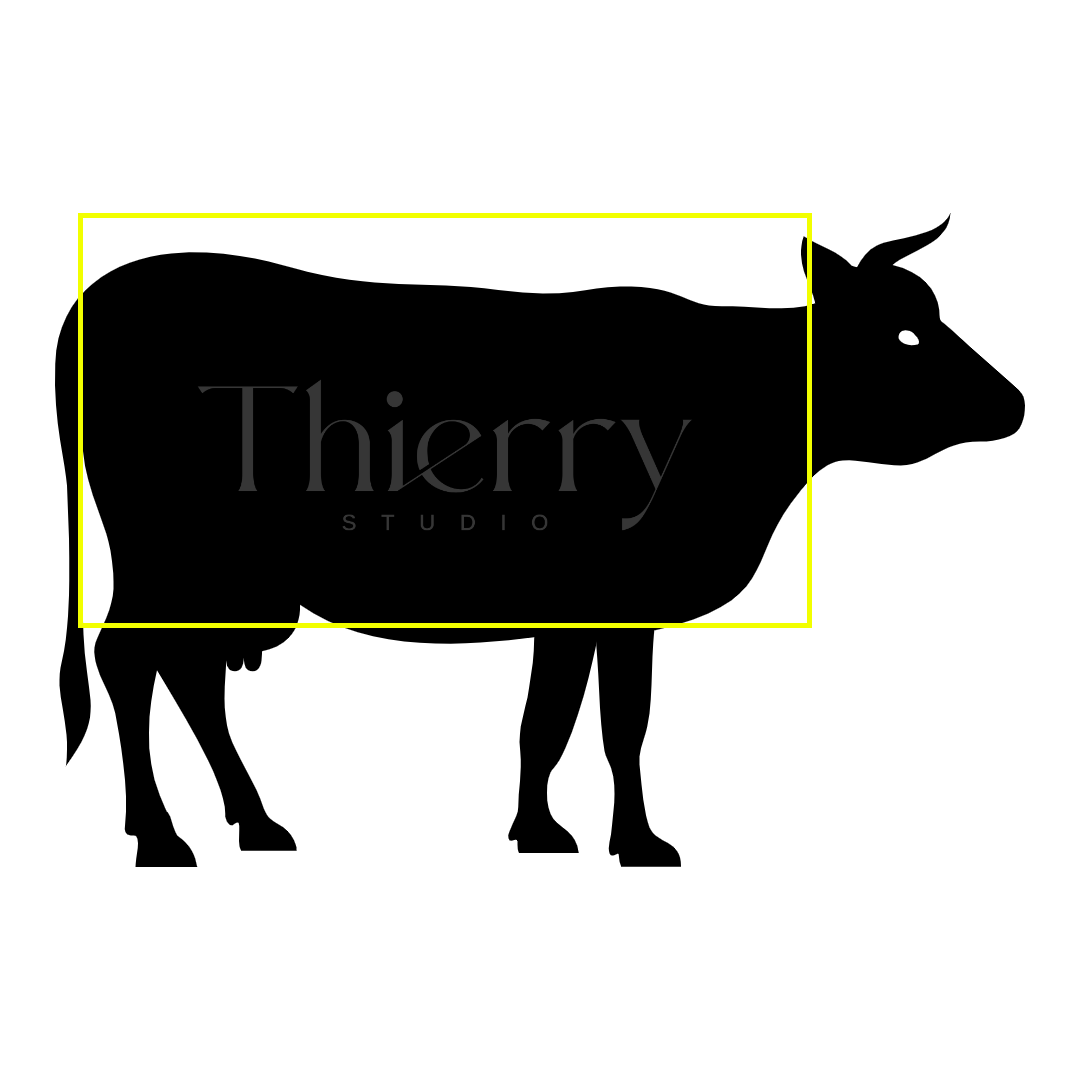
The grain is more even toward the rear,
which is the area I prefer to use.
It is generally regarded as the best part of the hide.
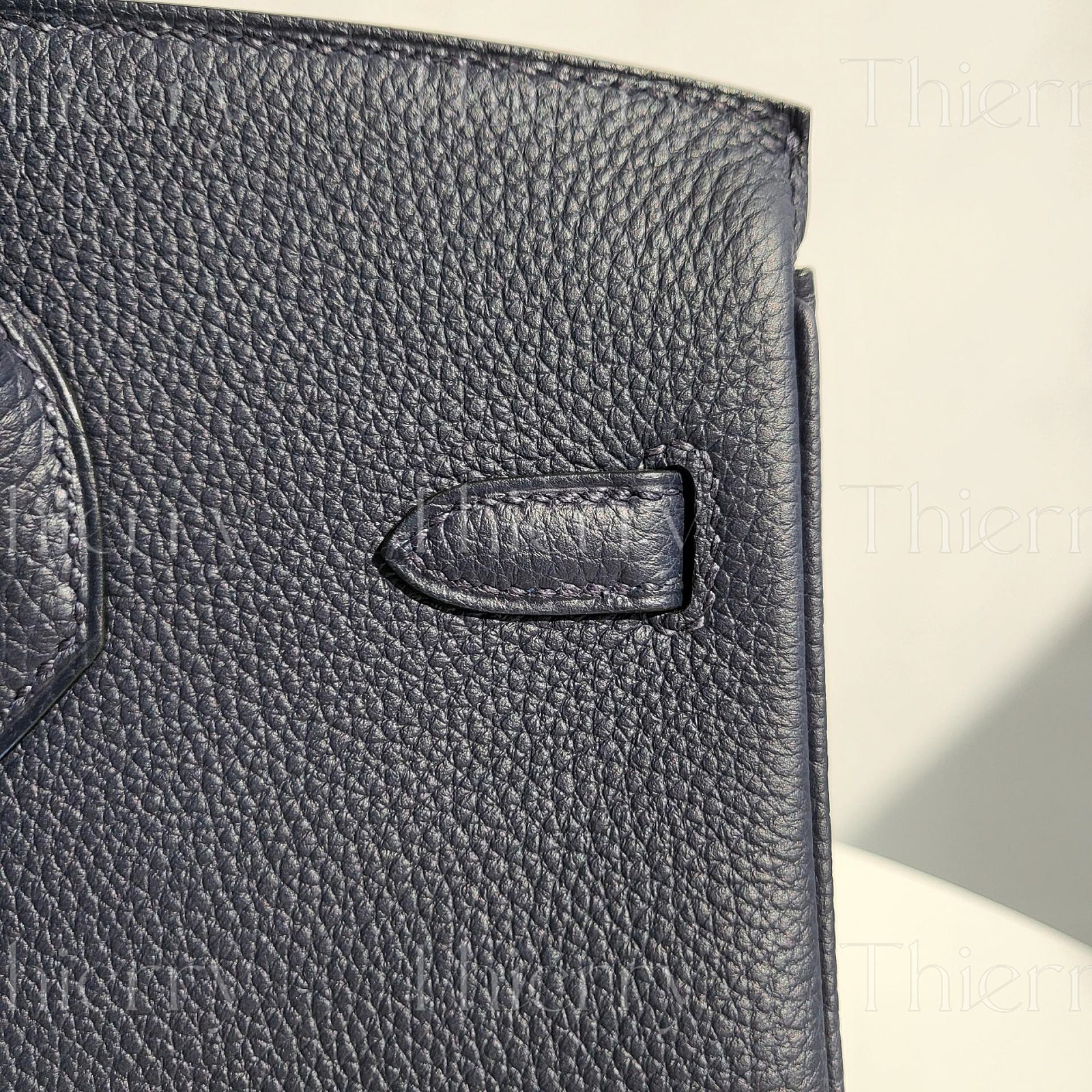
(Thierry Studio Birkin 25 in Bleu Nuit)
The grain is beautifully even, isn’t it?
You may wonder why we go to the trouble
of sourcing leather so often.
Why not buy a large quantity every quarter?
It is a fair question.
Large Hermès-style bag factories have low prices and many wholesale customers,
so their leather stock turns over quickly.
Their production is split into specialized stages,
allowing them to work quickly and sell through inventory.
For them, buying large quantities makes sense.
We are a small workshop with just six experienced artisans,
each making an entire bag from start to finish, as at Hermès.
With that small-scale approach,
we cannot turn over stock in the same way.
Neutral colors sell steadily enough to keep some in stock,
but brighter shades may sit unused for three or four months.
The longer leather is stored,
the more its sheen can change,
along with its tension and texture, reducing its quality.
That is why we regularly visit suppliers and inspect the hides ourselves.
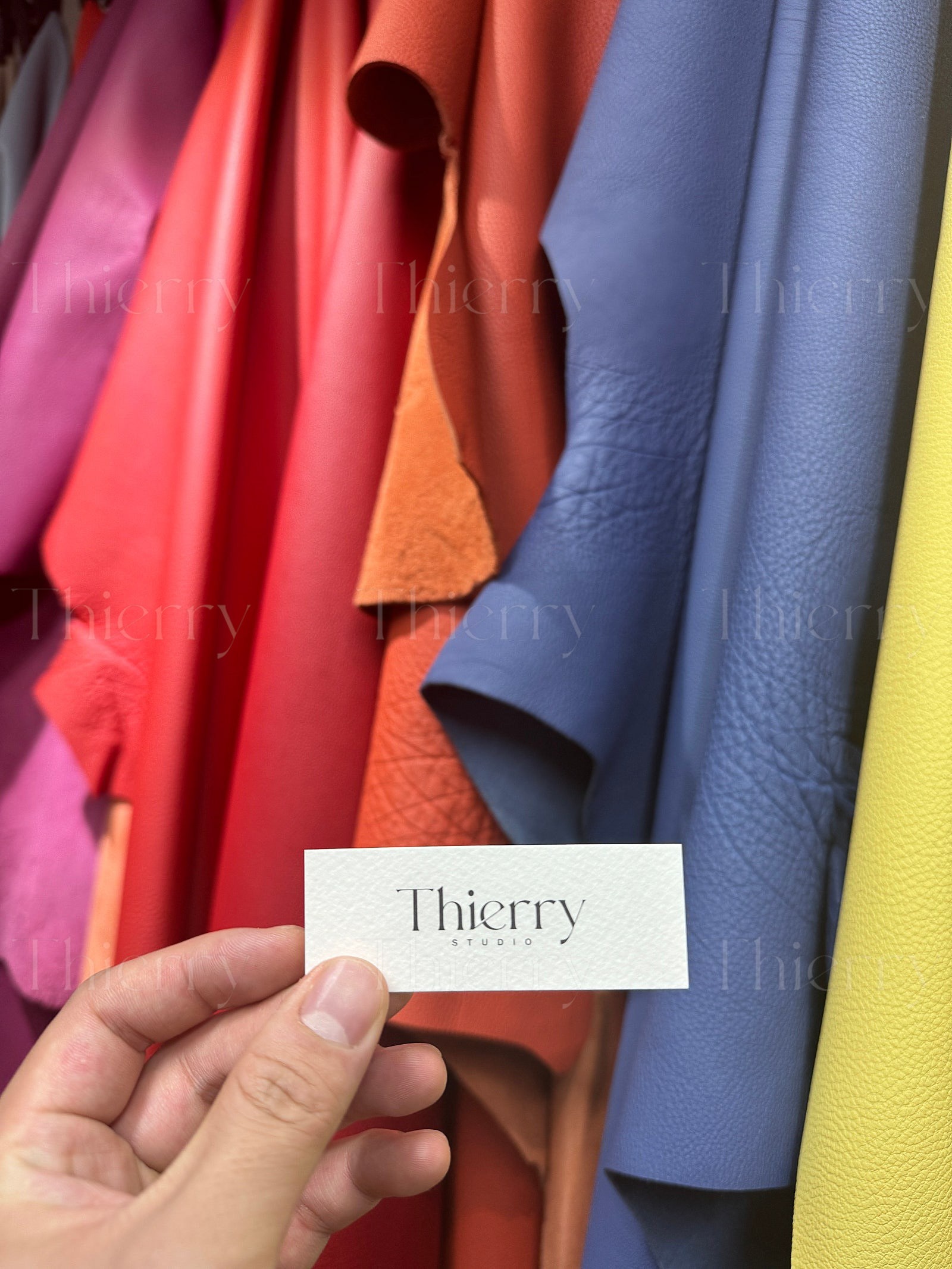
Think of a greengrocer visiting the market
early each morning to choose fresh produce.
Because we use only carefully selected areas,
a hide usually yields just one or two bags.
We could squeeze out four to reduce costs,
but the bags would be more prone to losing their shape, with mismatched grain
and a less attractive, lower-quality finish.
I could not sell a bag like that with confidence.
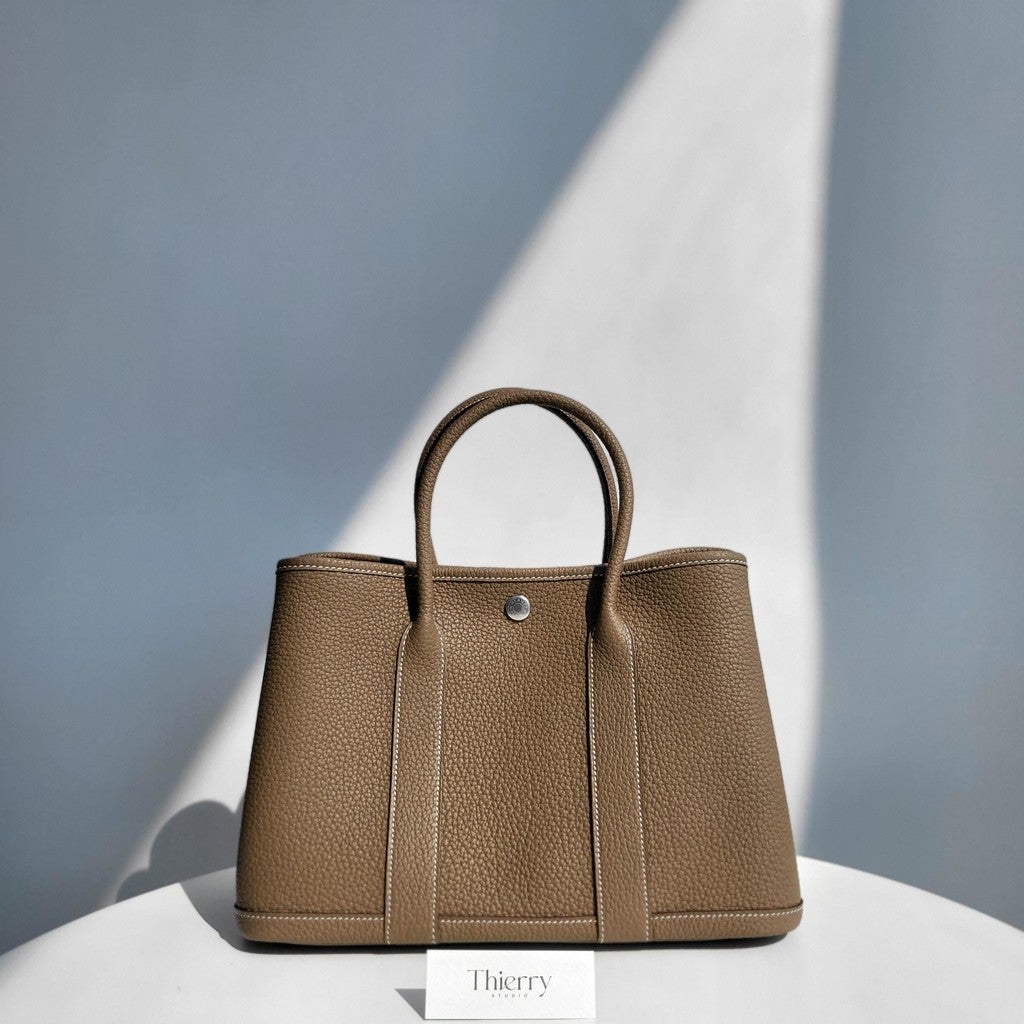
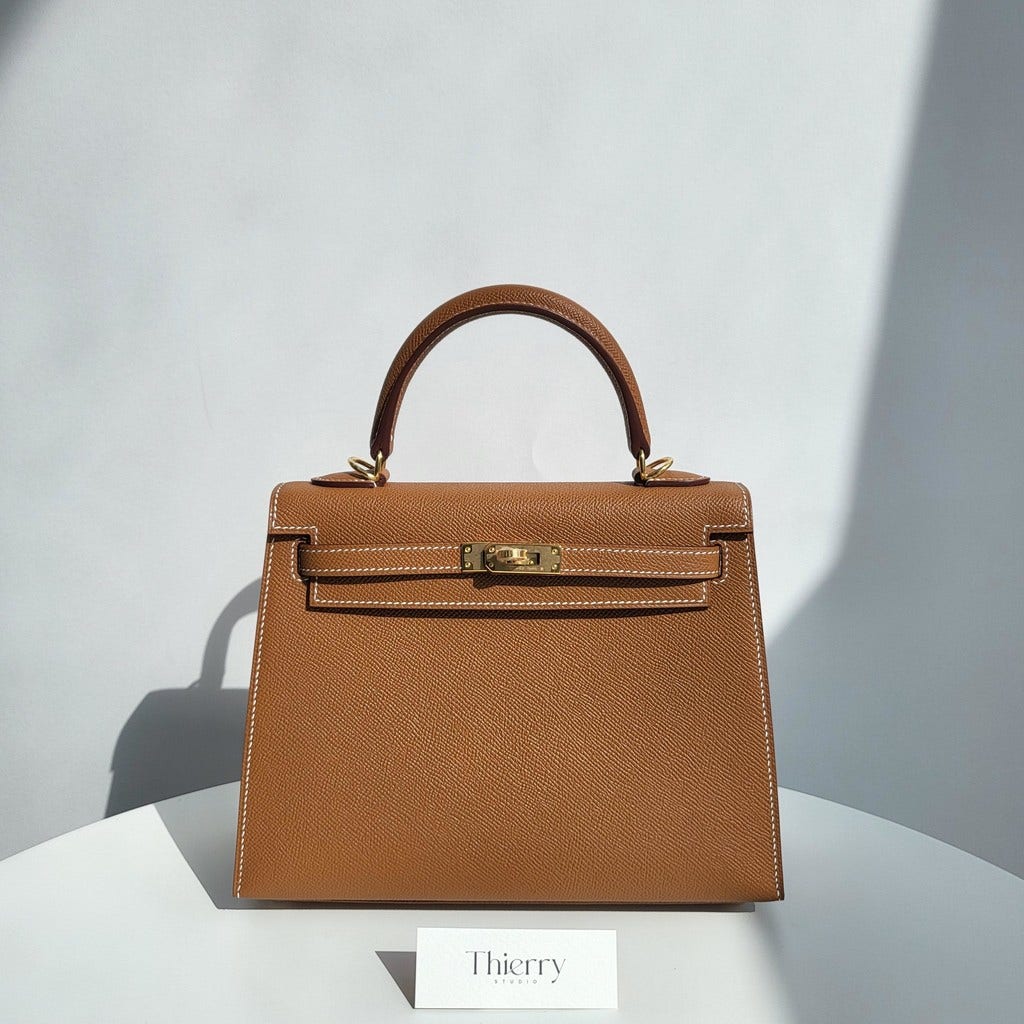
Even if one hide produces only one bag
and the rest is discarded, I would rather make that bag properly.
That is my principle and my pride.
These designs come from one of the world’s most respected luxury houses.
They deserve to be made well.
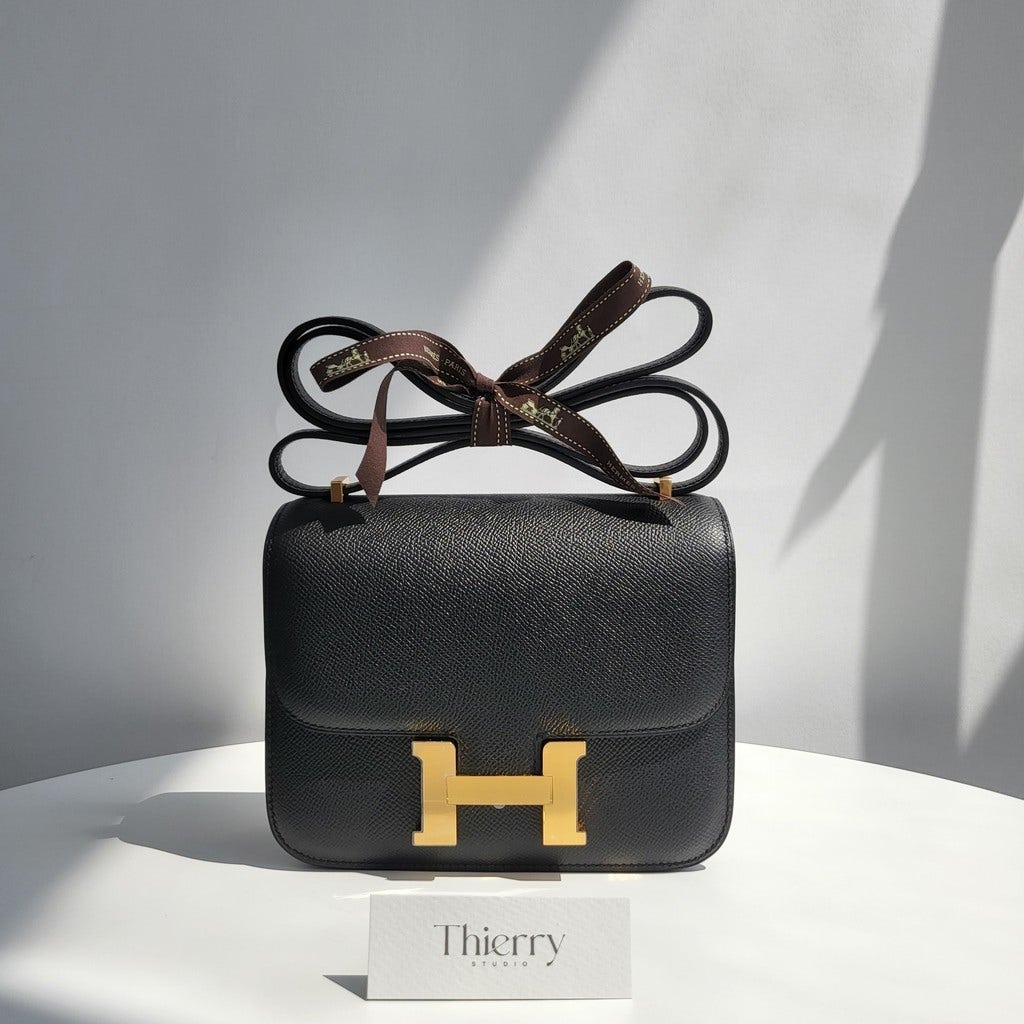
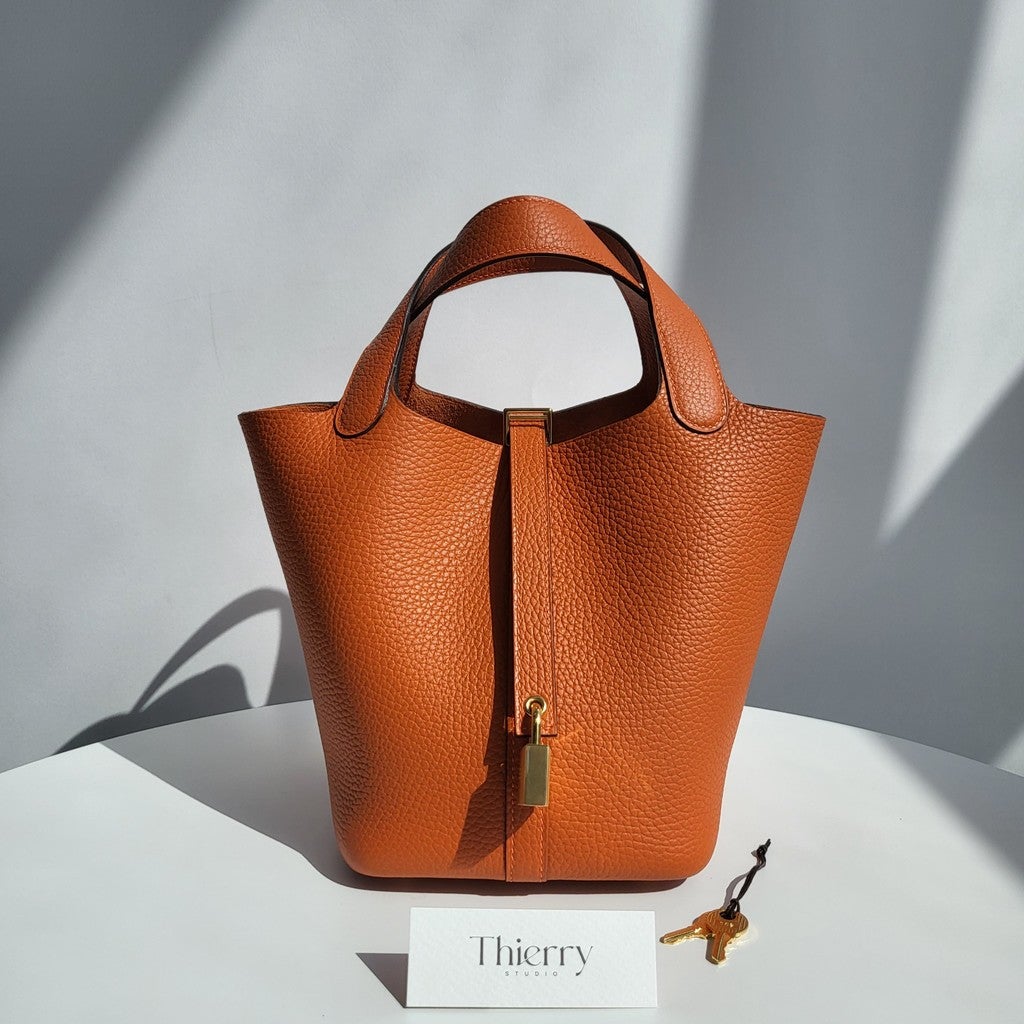
An Hermès bag can be used for ten or twenty years.
In ten or twenty years, Hermès will still be at the top,
and people will still recognize its value.
Think of this as a bag for at least ten years, and seek out the best quality.
It is painful to see customers
hesitate after hearing our prices,
then search for “Thierry-level quality, but cheaper,”
only to end up
disappointed by another shop and returning to buy from us.
There is no shortcut to quality at a bargain price.

The original bag costs around US$22,370, after all.
Louis Vuitton and Chanel are widely carried these days,
but Hermès,
especially the Birkin and Kelly,
is not a bag just anyone can obtain.
If you feel an authentic Hermès would look natural on you,
choose an experienced maker like us and pay a fair price.
Please do not let yourself be misled elsewhere
and come back after an expensive disappointment!
Thank you for reading this long post.
I hope it has conveyed how sincerely I care about these products.
