

In this post, we are taking a closer look
at the Hermès orange box!
Orange is synonymous with Hermès.
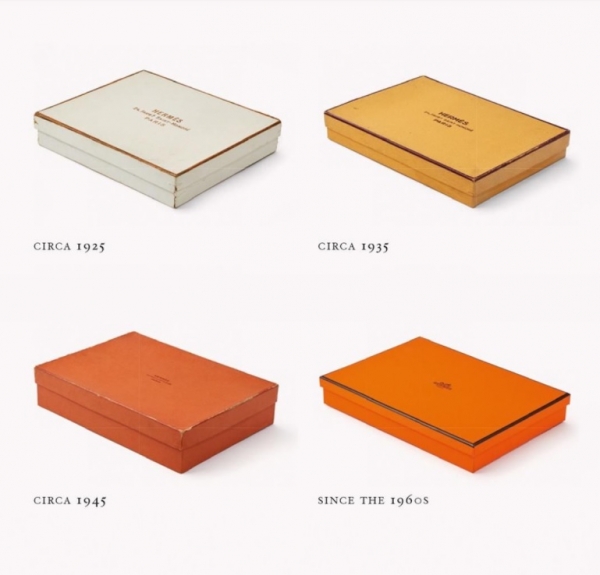
But it was not the color the house used from the beginning.
The original boxes in the 1920s were cream with gold borders.
In the 1930s, the boxes were yellow,
and orange began to appear in the 1940s.
Then, in the 1960s,
the familiar Hermès orange box took shape.
Material shortages continued
even after the Second World War,
making cream and yellow boxes—then associated with luxury—hard to obtain.
Orange, a color with very little demand,
was eventually the only option left,
so Hermès had little choice but to use orange boxes.
Hermès felt it made no sense
to hold up production over packaging.
Although orange was initially a necessity,
the color has since become an icon in its own right
and a symbol of luxury.

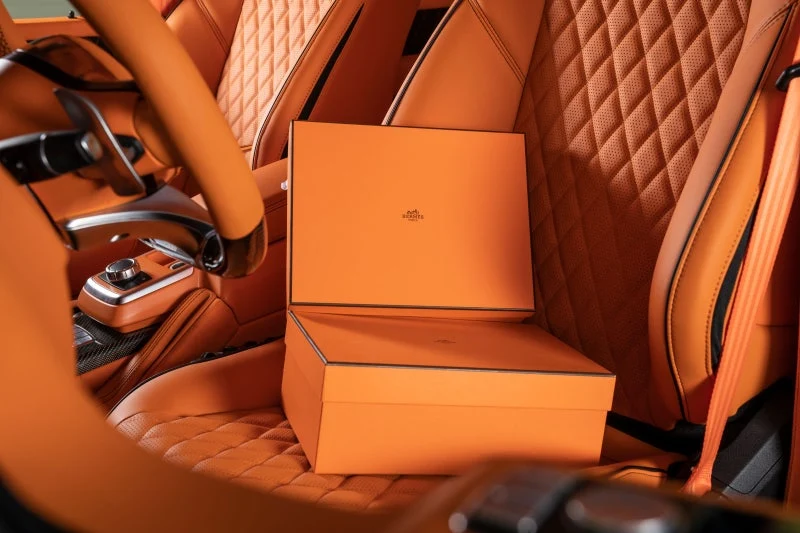
Mercedes-Benz G-Class
“Hermès orange”has even become a color description of its own,
with some owners customizing the interiors
of six-figure luxury cars in this shade.
There is another
little-known detail about the Hermès box.
Here it is:


[Authentic Hermès box]
Under UV light,
a hidden Hermès logo appears on the authentic box.
These days, however,
some non-authentic boxes also reveal a logo.
So today, we have put together
a comparison of Hermès-style boxes from different sellers.
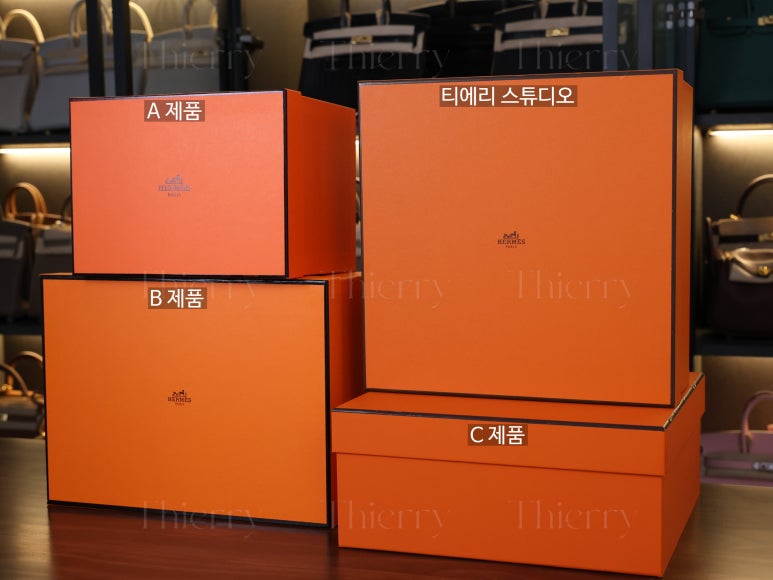
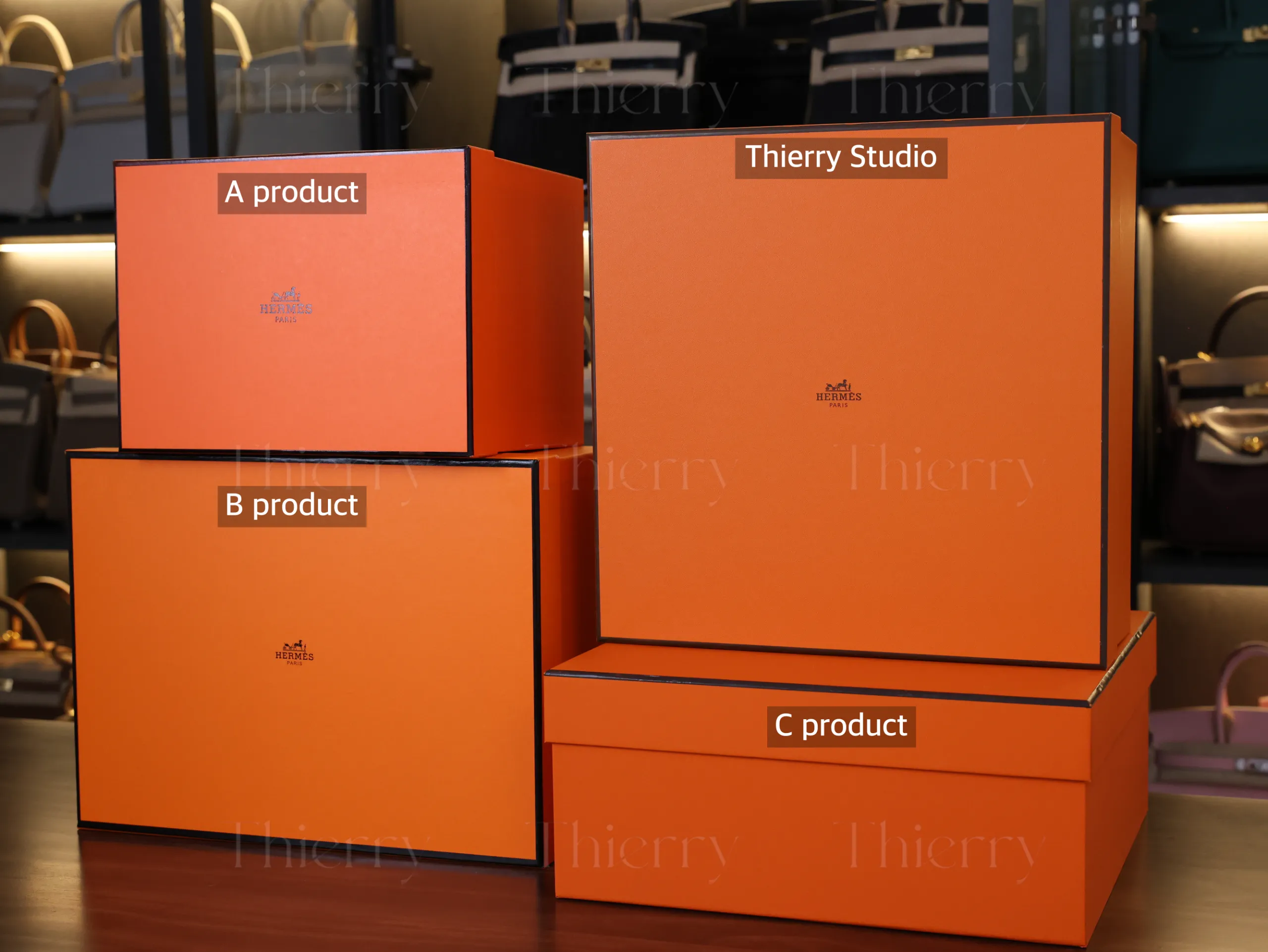
Including Thierry Studio,
we have boxes from four sellers in total.
Before even looking at the logos,
the shades of orange are all different. Automatic camera adjustments
make the differences look less dramatic in photos,
but they are much more noticeable in person.
Box A is so vivid that it looks almost red,
Box B is too pale,
and Box C has an unusually deep orange tone.
With colors like these,
you can spot a difference even without using UV light.
So how well have they reproduced
the logo that appears under UV light?
[Box A]
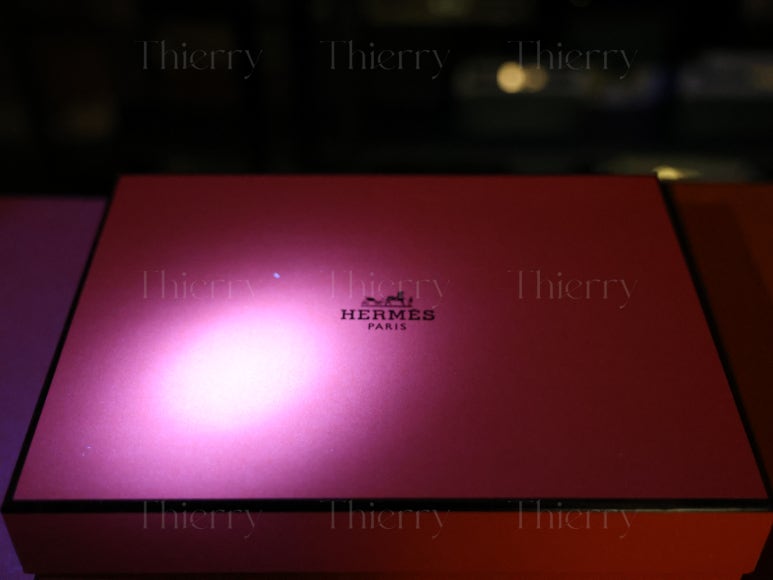
[Box B]
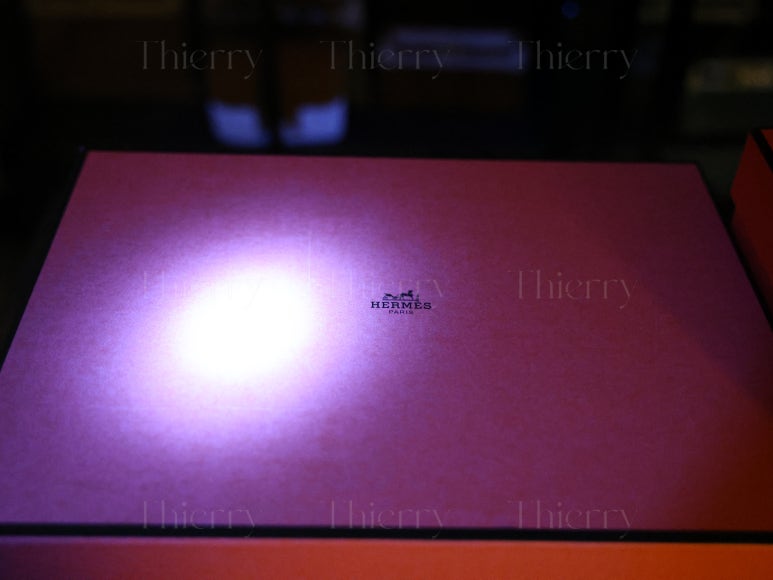
Neither Box A nor Box B reveals a logo at all.
For a Birkin 25,
Seller A charges around US$1,120,
while Seller B charges around US$1,340.
Those prices are higher than you might expect, aren’t they?
One might expect compromises from a budget seller,
but even relatively expensive products can miss these packaging details.
That is why people used to use this as an authenticity check.
Thierry Studio, however,
takes a different approach.
[Thierry Studio]
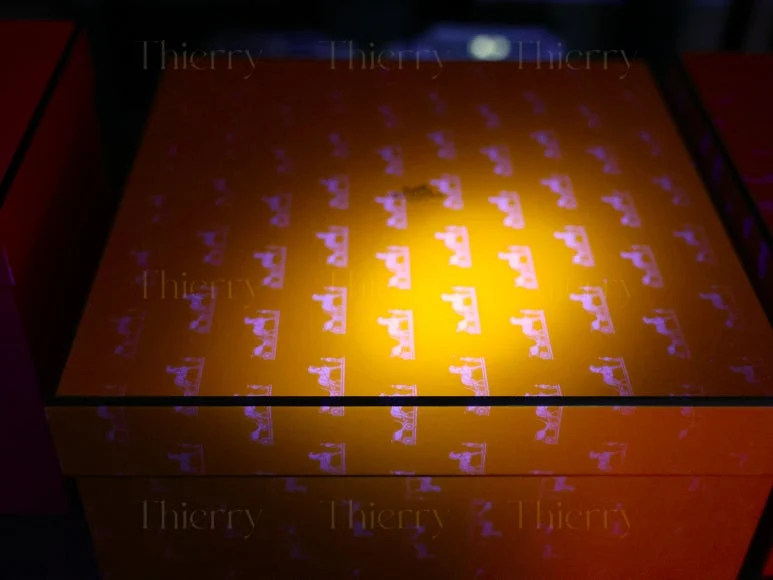
What do you think? It shows up clearly, doesn’t it? 🙂
Finally, let’s look at Box C.
[Box C]

Seller C’s Birkin 25
costs around US$1,790 or more.
At that fairly high price,
Box C does reveal a logo, but…
[Left: Thierry Studio / Right: Box C]
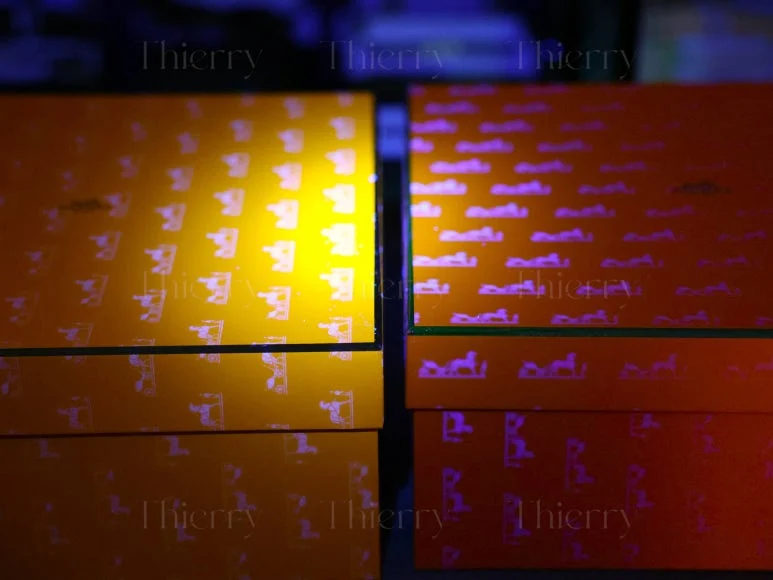
Placed beside Thierry Studio’s,
the details look rather rough, don’t they?
Let’s compare them more closely.
[Box C]
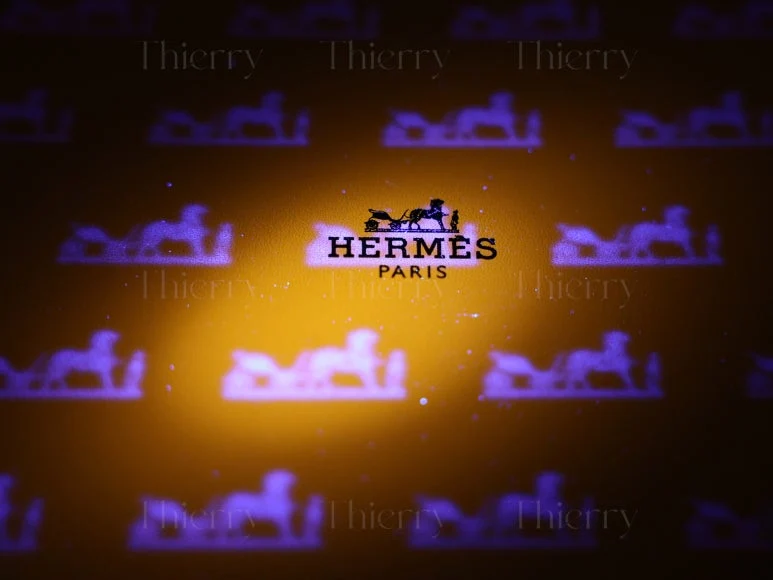
The camera is not out of focus here.
The logo looks blurred,
but that is actually how it appears in person.
They have reproduced the UV-reactive effect,
but the logo itself lacks definition.
If you spent upwards of US$1,490 and received this box…
would it really be much better
than one with no UV logo at all? The difference would probably be obvious.
[Thierry Studio]
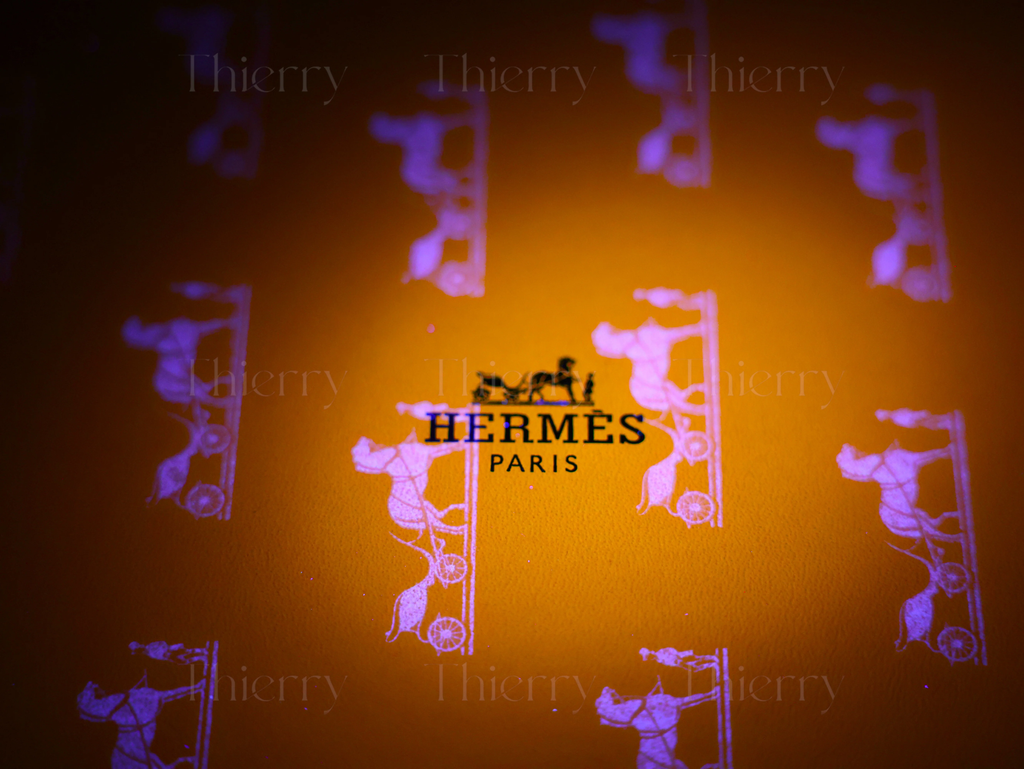
By comparison, Thierry Studio’s logo
reproduces the horse and carriage
with fine detail. Under UV light,
this level of precision is needed for the difference to be hard to spot.
Of course, who is likely to examine it with a UV light?
Still, if you are receiving a box,
it is nice to have the details reproduced this carefully!
Here is another side-by-side photo
of Thierry Studio’s box and Box C.
[Left: Thierry Studio / Right: Box C]
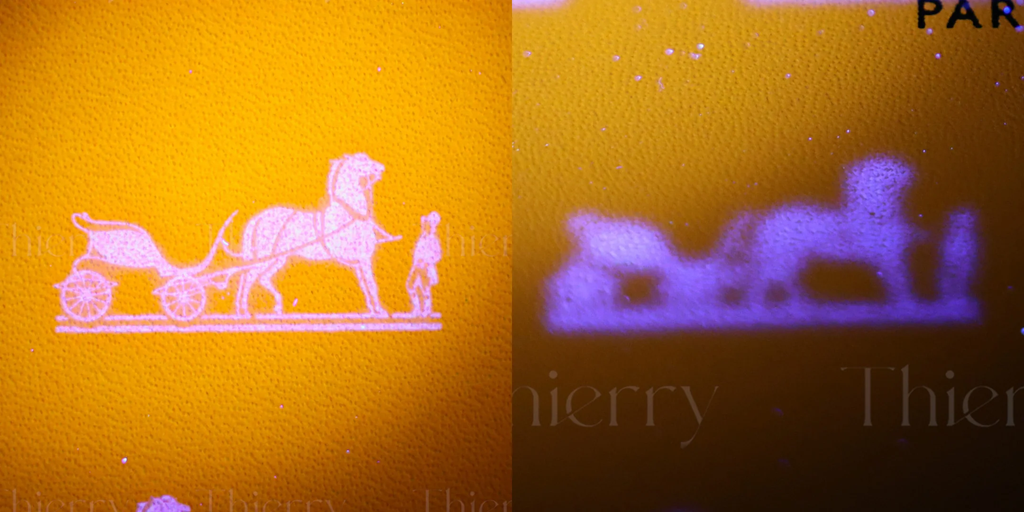
At Thierry Studio, we put care into
every detail, from the product to its box.
Thank you for recognizing that effort 🙂
